

Key Highlights
- Becoming a Registered Behavior Technician (RBT) is a rewarding first step into the field of behavior analysis.
- RBT training involves a 40-hour training course that prepares you for the RBT certification exam.
- The primary requirements include being 18 years old and having a high school diploma or equivalent.
- Key responsibilities involve implementing behavior plans and collecting data under the supervision of a BCBA.
- Completing your RBT certification opens up numerous career opportunities, making a real difference in people’s lives.
Introduction
Are you looking for a fulfilling career path that allows you to make a tangible difference? Becoming a behavior technician in the field of Applied Behavior Analysis (ABA) might be the perfect fit for you. Earning your RBT credential is an excellent entry point into this growing field. This role allows you to work directly with individuals, helping them develop essential skills and improve their quality of life, all while building a strong foundation for future career growth.
Understanding RBT Training and Its Purpose
So, what exactly is RBT training? It’s a specialized program designed to prepare you for the role of a Registered Behavior Technician. This training is a mandatory step outlined by the Behavior Analyst Certification Board (BACB), the organization that provides the RBT certification. The goal is to equip you with the foundational knowledge of behavior analysis needed to work effectively and ethically.
Anyone who wants to become a certified RBT must complete this training. Upon finishing the coursework, you must also pass a competency assessment to prove you can apply what you’ve learned. This entire process ensures you are ready to provide high-quality support to clients and families.
Who Can Benefit from RBT Training in Maryland?
A wide range of individuals in Maryland can find immense value in completing RBT training. You don’t need prior experience in Applied Behavior Analysis to get started; the main prerequisite is having a high school diploma. This training is ideal for anyone passionate about helping others, especially those with Autism Spectrum Disorder (ASD).
The course is particularly relevant if you are already working in a related field or are considering a career change. Many professionals find that RBT training enhances their skills and improves their service delivery. This includes:
- Direct-care staff and paraprofessionals
- Educators, teacher’s aides, and classroom assistants
- Individuals exploring a career in human services or behavioral health
Ultimately, if you plan to pursue advanced credentials in ABA, such as becoming a Board Certified Assistant Behavior Analyst (BCaBA) or a Board Certified Behavior Analyst (BCBA), starting as a behavior technician is a fantastic first step. It provides hands-on experience that is invaluable for a long-term career.
Roles and Responsibilities of a Registered Behavior Technician
As a Registered Behavior Technician, you play a vital, hands-on role in the therapeutic process. You will work under the direct supervision of a certified behavior analyst to implement treatment plans and help clients achieve their goals. Your daily tasks are guided by the RBT Task List, which outlines the core competencies of the position.
Your primary responsibilities focus on the direct implementation of behavioral programming. This involves a variety of duties that are crucial for the client’s progress. You will be expected to:
- Implement behavior intervention plans designed to support skill acquisition and behavior reduction.
- Engage in precise data collection to track a client’s progress.
- Assist with specific assessments under your supervisor’s guidance.
- Communicate effectively with your supervisor and the client’s family.
Your work ensures that interventions are applied consistently and effectively. By building rapport with clients, you create a supportive environment where they can learn new skills and improve their daily functioning. This direct interaction is at the heart of what makes the role so impactful.
Eligibility and Requirements for Becoming an RBT
Before you can earn your RBT credential, you must meet a few key eligibility requirements set by the Behavior Analyst Certification Board (BACB). The certification process is designed to ensure that every RBT has the necessary background and training to provide safe and effective services. This includes meeting specific age and educational standards before even starting a training program.
Once you complete your training, the journey isn’t over. You’ll need to pass a competency assessment and the final RBT exam to prove your skills. Let’s look closer at the specific requirements you’ll need to fulfill to become a certified RBT.
Educational and Age Requirements
Getting started on your path to RBT certification is more accessible than you might think. The foundational requirements are straightforward, opening up career opportunities to a broad range of candidates. You do not need a college degree or prior experience in behavioral analysis to enroll in a training program.
The first requirement is age. You must be at least 18 years old to be eligible for certification. This ensures you have the maturity and responsibility required for the role. Secondly, you need to have a minimum of a high school diploma or its equivalent, such as a GED.
These baseline requirements make the RBT credential an attainable goal for many who are passionate about the field. By meeting these simple prerequisites, you can begin your 40-hour training and take the first step toward a rewarding career helping others.
Steps to Qualify for the RBT Credential
The RBT certification process involves several key steps that ensure you are fully prepared for the role. Navigating this process is simple when you know what to expect. It begins with your training and ends with you passing the final exam.
First, you must successfully complete a 40-hour training program that meets the BACB’s standards. Once you finish, you will receive a certificate of completion, which is necessary for the next stage. From there, the steps include:
- Passing a criminal background check to ensure client safety.
- Completing the RBT Competency Assessment, where a BCBA will observe you performing various tasks to confirm your skills.
After you have successfully completed your training and the competency assessment, the final step is to apply for and pass the RBT certification exam. Passing this exam officially grants you the RBT credential, allowing you to begin your work in the field.
Exploring the RBT 40-Hour Training Course
The cornerstone of your journey to becoming an RBT is the 40-hour RBT training. This training course is designed to cover all the key concepts and skills outlined in the RBT Task List. While the training must be at least 40 hours long, many programs are self-paced, allowing you to complete it on your own schedule within a set timeframe, such as 180 days.
This flexibility makes it easier to balance your training with other commitments. The course curriculum is structured to give you a comprehensive understanding of ABA principles before you step into a professional role. Let’s examine what topics you’ll study and how you can complete your training.
Core Topics Covered in the RBT Training Curriculum
Your 40-hour training curriculum is packed with essential information to prepare you for success. The content is designed to align with BACB standards, ensuring you learn everything needed for your competency assessment and the final exam. The topics provide a strong foundation in the principles of behavior analysis.
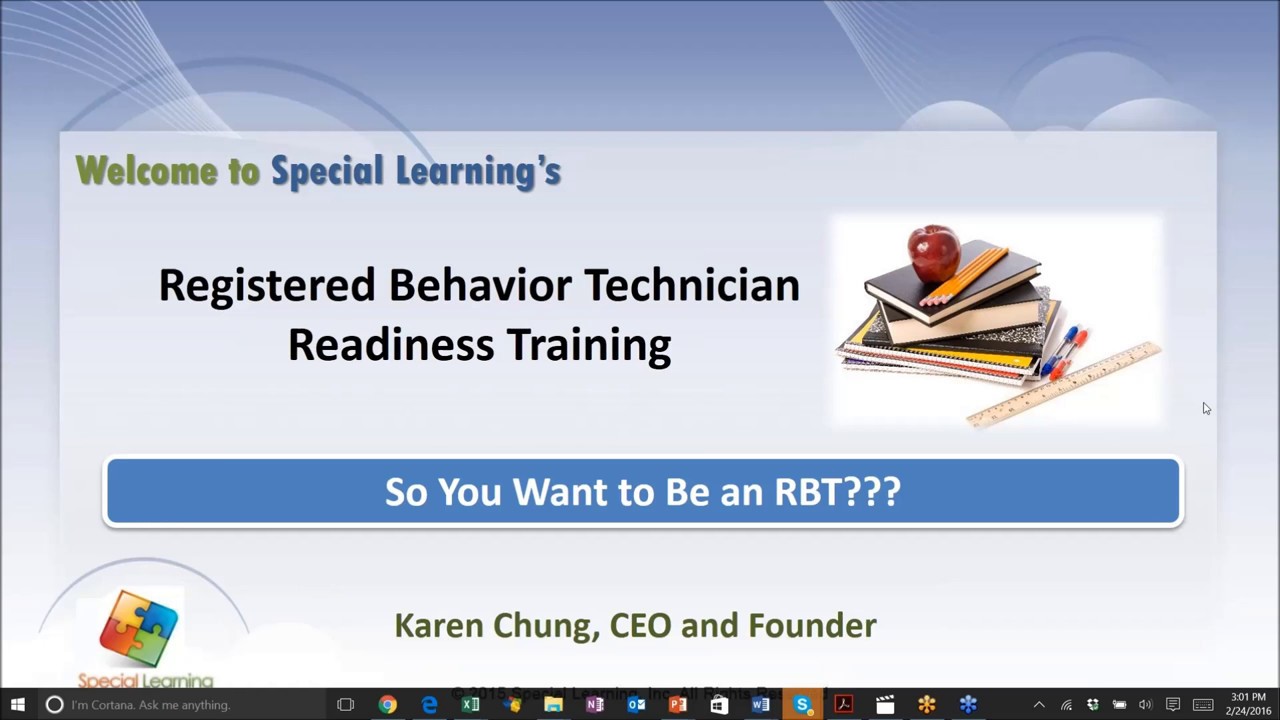
You will study a wide range of subjects, from the history of the field to the practical application of techniques. A quality training program will cover all core content areas, including:
- Ethical Guidelines: Understanding professional conduct and the RBT Ethics Code.
- Measurement and Data Collection: Learning how to accurately measure behavior and graph data.
- Skill Acquisition: Studying techniques like Discrete-Trial Teaching and Naturalistic Teaching to help clients learn new skills.
- Behavior Reduction: Exploring strategies to decrease challenging behaviors safely and effectively.
These topics, along with others like assessment procedures and documentation, ensure you are well-prepared to work under the supervision of a BCBA and provide effective, evidence-based care.
Online vs. In-Person RBT Training: What’s Best for You?
When choosing a training course, you’ll find both online and in-person options. Is one better than the other? The best choice depends entirely on your learning style, schedule, and personal preferences. Online RBT training is fully accepted for certification as long as the program meets the BACB’s requirements.
Online programs offer incredible flexibility, allowing you to complete coursework on your own schedule from any location. They often use pre-recorded webinars and digital materials. In-person training provides a more structured environment with face-to-face interaction with instructors and peers, which some learners prefer.
To help you decide, consider the key differences between these two formats.
| Feature | Online RBT Training | In-Person RBT Training |
| Flexibility | High; learn at your own pace and schedule. | Low; fixed class times and location. |
| Accessibility | Access from anywhere with an internet connection. | Requires travel to a specific training site. |
| Interaction | Primarily through email or forums; some offer live support. | Direct, face-to-face interaction with instructors and peers. |
| Cost | Often more affordable due to lower overhead. | Can be more expensive, with potential travel costs. |
Choosing an Accredited RBT Training Provider
Selecting the right training provider is one of the most important decisions you’ll make on your path to RBT certification. It’s crucial to choose an accredited RBT training program that is recognized by the Behavior Analyst Certification Board (BACB). This ensures the curriculum meets the high standards required for you to be eligible for the exam and that you receive a quality education. Many universities and private organizations offer these quality programs.
Enrolling in a non-accredited course could mean your training hours won’t count toward your certification, forcing you to start over. A reputable training provider not only prepares you for the exam but also equips you with the practical skills needed for success in the field. So, how can you spot a high-quality program?
How to Identify Quality and Accredited RBT Programs
Finding a quality accredited RBT training program requires a bit of research, but it’s well worth the effort. The first and most important step is to confirm that the program meets the BACB’s 40-hour training requirement. You can often verify this on the provider’s website or by contacting them directly.
Beyond basic accreditation, look for signs of a high-quality program. A strong indicator is that the course is designed and led by a Board-Certified Behavior Analyst (BCBA). This ensures the content is relevant, accurate, and taught by an expert in the field. When evaluating your options, consider these points:
- Check the curriculum: Does it comprehensively cover the RBT Task List and the RBT Ethics Code?
- Look for instructor support: Does the program offer access to a BCBA for questions and guidance?
- Read reviews: Search for testimonials or reviews from past students to learn about their experiences.
Taking these steps will help you choose a program that not only prepares you for the exam but also provides a strong educational foundation for your career.
Conclusion
Unlocking your potential with RBT training can significantly enhance your career and impact in the field of behavior analysis. Whether you’re a parent, educator, or professional, understanding the comprehensive nature of the RBT training program is crucial for success. By familiarizing yourself with the roles, responsibilities, and eligibility requirements, you can make an informed decision on how to proceed. The right training not only equips you with essential skills but also fosters a deeper understanding of autism spectrum disorders and related conditions.
At Admire ABA, our team provides personalized ABA therapy in Maryland, working closely with families and caregivers to support meaningful growth and daily progress.
Start building a rewarding career while making a difference in the lives of individuals with autism. Contact us today!
Frequently Asked Questions
Is online RBT training accepted for certification?
Yes, online RBT training is fully accepted for RBT certification. The Behavior Analyst Certification Board (BACB) approves online programs as long as they meet the 40-hour training requirement and cover the entire RBT Task List. After getting your certificate of completion, you will still be eligible for the certification exam.
Are there differences between free and paid RBT training courses?
Yes, there are often significant differences. Paid RBT training courses typically offer more comprehensive materials, direct access to instructor support from BCBAs, and a structured curriculum designed for high pass rates. While some free RBT training exists, quality programs that ensure you are prepared for RBT certification usually require an investment.
How long does it take to complete the RBT training and become certified?
The RBT certification process varies for each person. The 40-hour RBT training can be completed in a few weeks, depending on the training program and your pace. After that, you must schedule and complete the RBT competency assessment and the certification exam, which can add several more weeks to the timeline.
SOURCES:
https://aba.martinsburgcollege.edu/landing/?platform=Google&type_post=MC%20Professional%20Campaign&cpgn=22203389693&adg=172424762057&dvc=c&crtv=732033346700&kw=applied%20behavior%20analysis%20certification&ntwk=g&h1x=&h1=&h2=&lead_src=&plm=&gclid=CjwKCAiAybfLBhAjEiwAI0mBBq1HUH8vlKL0izskQO99CnF8ykdoO1LzsQZeJOLu_4pZlNZSGRhTpRoCaC0QAvD_BwE&gad_source=1&gad_campaignid=22203389693&gbraid=0AAAAADh5cA_jUZrHKAwyKBOyQAGbtY_w_&gclid=CjwKCAiAybfLBhAjEiwAI0mBBq1HUH8vlKL0izskQO99CnF8ykdoO1LzsQZeJOLu_4pZlNZSGRhTpRoCaC0QAvD_BwE
https://www.bacb.com/wp-content/uploads/2025/08/BCBAHandbook_251223-a.pdf
Advice on where to take online RBT training? Is the free training from Autism Partnership worth taking? I appreciate any advice on where to take online RBT training.
byu/BeaMiaVA inRBT
https://www.atcconline.com/course/40-hour-rbt-training
https://behavioruniversity.com/product/443/rbt-40-hour-training