

Introduction
If you have searched for whether you can become a BCBA without a master’s degree, you are not alone. Aspiring behavior analysts ask it because graduate school is a real commitment of time and money. Parents ask for it for a different reason: they want to understand exactly how qualified the person leading their child’s therapy needs to be.
The short answer is that a master’s degree is required to become a Board Certified Behavior Analyst (BCBA). There is no certified shortcut around it. That said, there is a lot of useful detail behind that answer, including several respected ABA credentials you can earn without a graduate degree and a clear picture of what these qualifications mean for the quality of care an autistic child receives. This guide walks through it all.
What Is a BCBA, and What Does One Do?
A Board Certified Behavior Analyst (BCBA) is a graduate-level professional who designs, oversees, and adjusts applied behavior analysis (ABA) programs. They are the clinical lead on a case. A BCBA conducts assessments, writes individualized treatment plans, sets measurable goals, analyzes progress data, trains the rest of the team, and coaches parents so that skills carry over at home.
In a typical ABA program, the BCBA is not the only person in the room. Registered behavior technicians often deliver the hour-to-hour therapy, while the BCBA supervises, interprets the data, and modifies the plan as the child grows. The certification exists to make sure the person making those clinical decisions has been trained to a consistent, verifiable standard.
Why a BCBA’s Qualifications Matter for Your Child
For families, the credential is a form of quality assurance. ABA is an individualized intervention, and small decisions add up: which skills to prioritize, how to respond to challenging behavior, when to fade a prompt, and how to keep a goal motivating rather than frustrating. Those judgments require formal training in behavioral science, supervised practice, and ongoing accountability to an ethics code. When a provider tells you a BCBA oversees your autistic child’s program, that is shorthand for a specific and substantial level of preparation.
Can You Become a BCBA Without a Master’s Degree?
No. To earn BCBA certification, you must hold at least a master’s degree. The credential is administered by the Behavior Analyst Certification Board (BACB), and every certification pathway it offers requires a graduate degree. A bachelor’s degree, an associate degree, or a strong portfolio of hands-on experience cannot substitute for the graduate-level requirement.
This trips people up because plenty of meaningful ABA work is done by professionals who do not hold a master’s degree. That work is real and valuable, but it falls under different credentials with different titles and different scopes of practice, which we cover below.
What the BACB Requires
The master’s degree is one of three connected requirements. Alongside a qualifying graduate degree, candidates generally must complete specific behavior-analytic coursework through a verified course sequence, accumulate supervised fieldwork hours, and pass the BCBA examination. The graduate degree typically needs to be in behavior analysis, education, or psychology, or to be paired with acceptable behavior-analytic coursework that meets the board’s standards.
Certification requirements are updated periodically, so anyone planning a career path should confirm the current criteria directly with the BACB rather than relying on a single article. The core point, however, has been stable for years: the master’s degree is not optional.
Why a Graduate Degree Is Part of the Standard
The requirement reflects the responsibility of the role. A BCBA interprets assessment data, makes clinical decisions that affect a vulnerable child, and supervises other staff. Graduate training in behavior analysis covers research methods, ethics, assessment, and intervention design at a depth that shorter programs do not reach. Holding the certification to a master’s-level standard is part of how the field protects the families it serves.
ABA Credentials You Can Earn Without a Master’s Degree
If you want to work in ABA but do not have a graduate degree, you have genuine options. These roles are essential to how therapy actually gets delivered, and many BCBAs started in exactly these positions.
Registered Behavior Technician (RBT)
The RBT credential is the most common entry point into the field, and it does not require a college degree at all. To qualify, you generally must be at least 18 years old, hold a high school diploma or equivalent, complete a 40-hour training program, pass a competency assessment, clear a background check, and pass the RBT exam. RBTs deliver direct ABA therapy under the supervision of a certified behavior analyst. In our in-home sessions, RBTs are often the professionals a family sees most, building rapport with the child and running the day-to-day program the BCBA designed.
Board Certified Assistant Behavior Analyst (BCaBA)
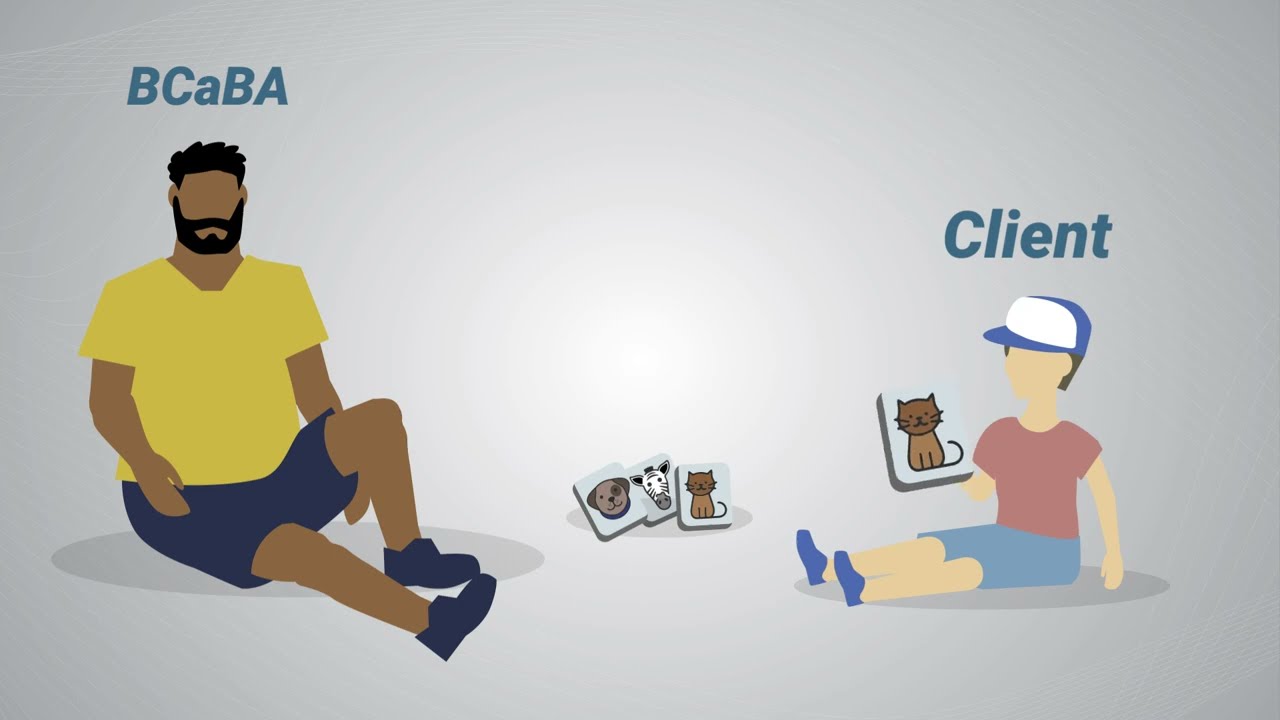
The BCaBA is a step up and requires a bachelor’s degree rather than a master’s. Candidates complete behavior-analytic coursework, finish supervised fieldwork, and pass the BCaBA exam. A BCaBA can help design and implement programs and can supervise RBTs, but they practice under the ongoing supervision of a BCBA. For someone who has a bachelor’s degree and is not ready to commit to graduate school, this is a recognized way to take on more clinical responsibility while continuing to grow.
How to Become a BCBA: The Real Pathway
If your goal is the full BCBA credential, here is the honest roadmap. It takes years, but it is well-defined.
Earn a Qualifying Graduate Degree
Complete a master’s degree (or higher) in an acceptable field such as behavior analysis, education, or psychology. Many candidates choose a program specifically built around behavior analysis so the coursework requirement is satisfied at the same time.
Complete Behavior-Analytic Coursework
If your degree does not already cover it, finish the required behavior-analytic coursework through a verified course sequence recognized by the BACB. This is the academic foundation the exam is built on.
Accrue Supervised Fieldwork Hours
Gain supervised practical experience under a qualified supervisor. The board sets the number of hours and the supervision rules, so confirm the current totals when you plan your timeline. This stage is where classroom knowledge becomes real clinical skill.
Pass the BCBA Examination
Sit for and pass the BCBA exam. Once you pass and meet every other requirement, you are certified and can practice as the lead analyst on a case.
What This Means for Maryland Families Choosing an ABA Provider
For families in Maryland, the credential question carries an extra layer. Maryland is one of the states that licenses behavior analysts, and practicing here generally requires a state license tied to BCBA certification through the State Board of Professional Counselors and Therapists. In practical terms, that means the master’s degree standard applies at the state level too, and a licensed behavior analyst in Maryland has met both national and state requirements.
A question we hear often during intake is some version of, “Who, exactly, will be overseeing my child’s care?” It is a good question to ask any provider. We have seen families feel real relief once they understand the structure: a master’s-level BCBA owns the clinical plan, and a trained, supervised team carries it out. When you are comparing providers, it is reasonable to ask whether a BCBA designs and monitors each program, how often that BCBA reviews progress, and how the technicians are supervised. A confident provider will welcome those questions.
Encouragement for Aspiring Behavior Analysts
If you are early in your journey and do not yet have a master’s degree, the path is open, just sequenced. Becoming an RBT is an accessible first step that lets you start working with autistic children right away and find out whether the field fits you. From there, a bachelor’s degree opens the BCaBA route, and a master’s degree opens the full BCBA credential. Many of the best analysts we work alongside built their expertise exactly this way, one stage at a time, with hands-on experience informing everything they later learned in graduate school.
Conclusion
You cannot become a BCBA without a master’s degree, because a graduate degree is a fixed requirement of the certification. What you can do is build a meaningful ABA career without one by earning the RBT or BCaBA credential, and you can map out a realistic route to the BCBA over time if that is your goal. For parents, the takeaway is reassuring: the credential is a deliberate standard designed to make sure the person leading your child’s therapy is genuinely qualified to do it. Understanding these titles helps you ask sharper questions and choose a provider with confidence.
Ready to Get Started With ABA Therapy?
At Admire ABA, every program is designed and supervised by qualified, master’s-level behavior analysts and carried out by a trained, caring team, so your child gets both clinical rigor and genuine warmth. We proudly serve families in Bowie, College Park, and Potomac with in-home ABA therapy, early intervention, parent training, and more.
If you have questions about your child’s care or want to understand who will be guiding their progress, we would love to talk. Contact us today to schedule a consultation and take the first step.
Frequently Asked Questions
Can you work in ABA therapy without a master’s degree?
Yes. You can work in ABA without a master’s degree as a Registered Behavior Technician (RBT), which requires only a high school diploma plus training and certification, or as a Board Certified Assistant Behavior Analyst (BCaBA), which requires a bachelor’s degree. Both roles deliver and support ABA therapy under the supervision of a BCBA. The master’s-level requirement applies specifically to the full BCBA credential.
Do you need a master’s degree to become a BCBA?
Yes. A master’s degree (or higher) is a required part of BCBA certification through the Behavior Analyst Certification Board. Along with the graduate degree, candidates must complete behavior-analytic coursework, finish supervised fieldwork, and pass the BCBA exam. There is no certified pathway to the BCBA that skips the graduate degree.
How long does it take to become a BCBA?
It varies, but most people spend several years on the full path. A bachelor’s degree typically takes about four years, a master’s degree adds roughly two more, and supervised fieldwork runs alongside or after coursework before you sit for the exam. Many candidates work as an RBT during this time to gain experience and income while they study.
SOURCES:
- https://www.bacb.com/bcba/
- https://www.bacb.com/bcaba/
- https://www.bacb.com/rbt/
- https://www.abainternational.org/
- https://health.maryland.gov/bopc/
- https://www.cdc.gov/autism/
- https://www.healthychildren.org/