

Introduction
Every summer, warm weather brings families to pools, lakes, and backyard sprinklers. For families raising a child on the autism spectrum, though, that same season carries a risk many parents outside the autism community never have to think about. Drowning is the leading cause of death among children with autism who wander, and the danger rises sharply once school lets out and pools open for the season.
This guide is written for parents, caregivers, ABA professionals, and educators who want a clear, practical understanding of the risk and a concrete plan for reducing it. None of this is meant to cause alarm. It is meant to replace uncertainty with a plan, because a plan is what actually keeps children safer.
Why Water Safety Is a Critical Concern for Autistic Children
The connection between autism and drowning risk is well documented, and the numbers are worth sitting with. Children with autism are estimated to be about 160 times more likely to die from drowning than children in the general population. Drowning accounts for a large majority of deaths following wandering incidents, with multiple national data sources placing the figure between roughly 70 and 90 percent of fatal wandering cases.
These are not abstract statistics. They reflect a real and specific pattern: a child leaves a supervised space, is drawn toward a nearby body of water, and is unable to communicate distress or swim to safety before a caregiver can respond.
Understanding Wandering (Elopement) and Its Connection to Water
Wandering, sometimes called elopement, refers to a child leaving a safe, supervised area without a caregiver’s knowledge. Research indicates that roughly half of children with autism engage in wandering behavior at some point, and incidents tend to peak around age five, though the risk continues well into adolescence.
Water is a common destination once a child has wandered. Nearby ponds, retention ponds, creeks, and residential pools are frequently the site of drowning incidents, and in many documented cases the water was within a few hundred feet of the child’s home. This is why water safety planning has to start at home, not just at the pool.
Why Water Attracts Autistic Children
Many children with autism are drawn to water because of its sensory properties. The sound, the visual movement of light on the surface, and the physical sensation of water on skin can all be calming or deeply engaging. This same sensory appeal that makes water enjoyable in a supervised setting is what makes it dangerous when a child gains unsupervised access to it, since the pull toward water can override an awareness of danger.
Building a Water Safety Plan for Your Family
A water safety plan works best when it layers several strategies together, since no single barrier or tool is foolproof on its own. Families across Maryland, whether in an urban rowhome, a suburban neighborhood with a community pool, or a rural property near a pond, can adapt these layers to their specific home.
Home and Yard Safety Measures
- Install door and window alarms, including chime-style alarms on exterior doors, so that a caregiver is alerted the moment a door opens.
- Add secondary or high-mounted locks that are outside a child’s reach or line of sight, since many children learn standard locks quickly through observation.
- Fence any backyard pool on all four sides with a self-closing, self-latching gate, separate from the house itself, per most state and local pool safety codes.
- Use a pool alarm or pool cover in addition to fencing, since layered protection matters more than any single measure.
- Empty and store kiddie pools, buckets, and other standing water containers immediately after use.
Community and Public Water Safety
Beyond the home, families should identify every body of water within walking distance, including neighbors’ pools, retention ponds, community fountains, and nearby creeks, and treat each as a location that requires a specific safety response if the child goes missing.
- Introduce your child’s information to neighbors who have backyard pools, so they know to call immediately if they see the child unsupervised.
- Notify local first responders in advance. Many police and fire departments maintain a voluntary registry or 911 profile for residents with autism or wandering risk.
- Practice a consistent search routine with every caregiver in the household: check water first, every time, without exception, since minutes matter.
Technology and Tracking Tools
GPS trackers, worn as a watch, clipped to clothing, or sewn into a shoe, can shorten search time dramatically. Door and gate sensors that send phone alerts extend a caregiver’s awareness beyond line of sight. None of these tools replace supervision, but they add a critical layer of time when seconds count.
Teaching Water Safety Skills: Swim Lessons and Beyond
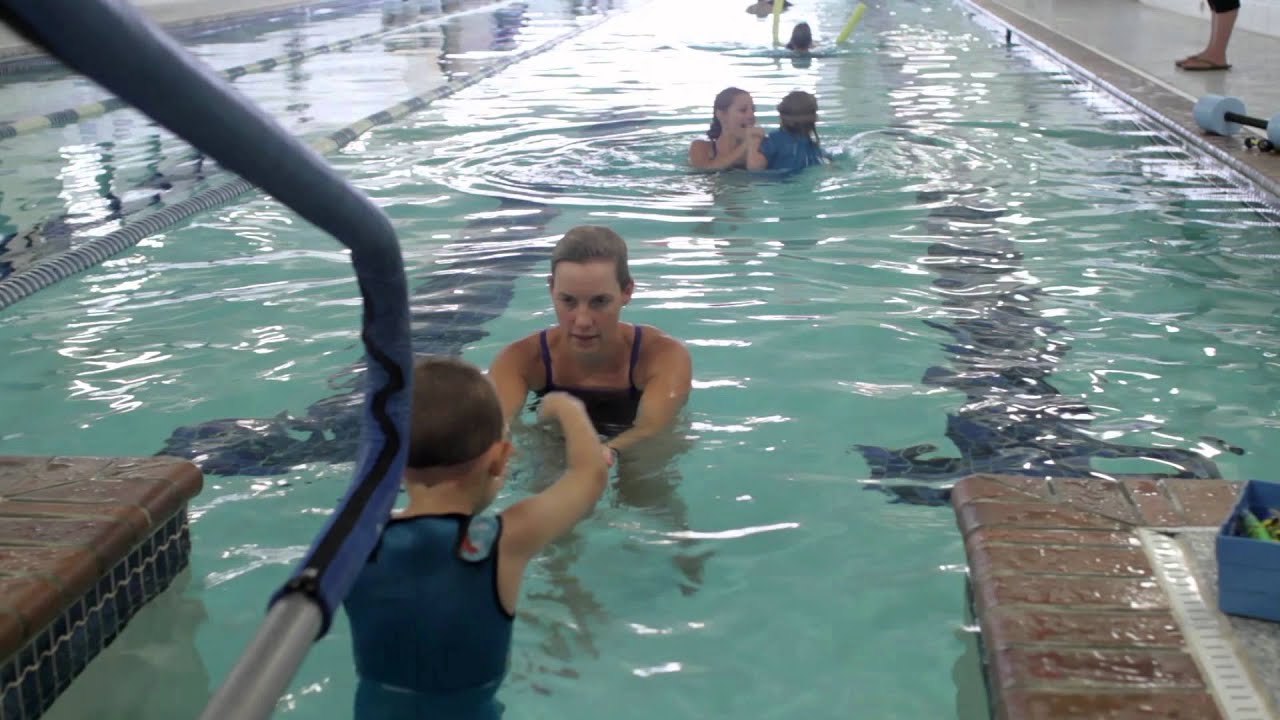
Swim instruction is one of the most protective steps a family can take, but not all swim programs are built with autistic learners in mind. Traditional group lessons often move too quickly through verbal instruction and unstructured social expectations.
Finding Adaptive Swim Instruction
Look for instructors experienced in adaptive or one-on-one swim lessons for children with developmental disabilities. A good program should be willing to start with basic water comfort and safety skills, such as floating, breath control, and how to get to the pool wall, rather than beginning with strokes. Programs affiliated with the YMCA, local parks and recreation departments, or autism-specific organizations often have adaptive tracks.
Practicing Water Safety Skills Through ABA
Applied Behavior Analysis can reinforce water safety skills the same way it builds any other functional skill: through repetition, clear reinforcement, and generalization across settings. In our sessions, we’ve built water safety goals directly into a child’s treatment plan, teaching a consistent response to hearing their name near water, practicing “stop and wait” at the edge of a pool, and rehearsing what to do if they end up in water unexpectedly.
One family we worked with had a son who was highly motivated by water play but had no reliable stopping behavior. Over several months, his BCBA built a stepwise program pairing a specific verbal cue with an immediate, high-value reinforcer for stopping at the water’s edge. By the following summer, that stop response had generalized from the therapy pool to the family’s actual backyard pool, giving his parents a genuine safety net that hadn’t existed before.
What To Do During a Wandering Emergency
Even with the best prevention plan in place, families should also be prepared for the possibility of an emergency, because a fast, correct response in the first minutes matters enormously.
Immediate Steps for Parents
- Check water first. Every pond, pool, ditch, or fountain within a few hundred feet of the last known location should be checked before searching anywhere else.
- Call 911 immediately. Do not wait to see if the child returns on their own, and tell the dispatcher clearly that the child has autism and may not respond to their name.
- Provide first responders with a recent photo, a description of what the child is wearing, and any known attractions or destinations, such as a specific yard, street, or body of water.
- If the family has a GPS tracker or door alarm log, check it immediately while waiting for help to arrive.
Working with First Responders
A 911 disability indicator or a pre-registered profile with local police can save critical time, since dispatchers and responding officers will already know the child may not respond verbally, may be nonverbal, and may be drawn toward water rather than away from danger.
How ABA Therapy Supports Ongoing Water Safety Skill-Building
Water safety is not a single lesson; it is an ongoing skill that needs to be built, reinforced, and generalized as a child grows. This is where structured, individualized support makes a lasting difference.
- In-home ABA therapy allows safety goals, like responding to a caregiver’s voice or practicing a stop response, to be practiced in the exact environment where they matter most.
- Parent training equips caregivers with consistent language and reinforcement strategies so that safety skills are reinforced the same way at home as they are in therapy.
- Early intervention ABA therapy can begin building foundational safety and communication skills well before a child is old enough for formal swim lessons.
- Weekend ABA and daycare-based ABA extend consistency into the settings where children spend the most unsupervised time during summer break.
Conclusion
Autistic children face a documented, elevated risk of drowning, driven largely by the intersection of wandering behavior and a natural draw toward water. That risk is real, but it is also addressable. Layered home safety measures, adaptive swim instruction, a rehearsed emergency plan, and consistent skill-building through ABA therapy can meaningfully reduce the danger and give families genuine peace of mind heading into the summer months.
Get Support Building a Water Safety Plan
Admire ABA works with families throughout Maryland to build individualized safety and communication goals into every child’s ABA treatment plan, whether therapy happens at home, on the weekend, or through daycare-based support. We proudly serve families across Wheaton in Montgomery County, Bowie in Prince George’s County, and Ellicott City in Howard County, and beyond.
If you’d like help building water safety skills into your child’s ABA program this summer, contact us today to speak with our team and schedule a consultation.
Frequently Asked Questions
Why are children with autism more likely to drown?
Children with autism are more likely to drown primarily because of a combination of wandering (elopement) behavior and a strong sensory attraction to water. A child who wanders away from supervision is often drawn toward the nearest body of water, and many children with autism cannot recognize danger or call for help once in the water, which is why drowning accounts for a large share of fatal wandering incidents.
At what age should a child with autism start swim lessons?
There is no single required age, but many safety and autism organizations recommend starting water familiarization and basic safety skills as early as possible, often around age three or four, using an adaptive, one-on-one instructional approach rather than waiting for a traditional group class to become available.
What should I do first if my nonverbal autistic child goes missing near water?
Check every nearby body of water immediately, including pools, ponds, and ditches, while simultaneously calling 911 and clearly telling the dispatcher that the child has autism, may be nonverbal, and may not respond to their name. Every minute matters, so search water first rather than searching the surrounding area first.
SOURCES:
- https://nationalautismassociation.org/drowning-risk/
- https://www.autismspeaks.org
- https://www.mass.gov/info-details/autism-wandering-and-water-safety-information-for-providers-educators
- https://www.cdc.gov
- https://pmc.ncbi.nlm.nih.gov/articles/PMC5721095/
- https://www.aap.org
- https://www.kennedykrieger.org