

Introduction
Visual schedules give autistic children a clear, predictable picture of what’s happening now and what comes next, and that clarity can turn stressful transitions into manageable ones.
For many families, the hardest parts of the day aren’t the activities themselves. It’s the space between them: getting off the tablet, leaving the park, moving from breakfast to getting dressed. A visual schedule for autism fills that space with something concrete for a child to hold onto, instead of a verbal instruction that disappears the moment it’s spoken.
What Is a Visual Schedule?
A visual schedule is a sequence of pictures, icons, photos, or words that shows a child the order of events in their day or within a specific routine. Rather than relying on a parent repeating “in a minute” or “almost done,” the child can look at the schedule and see for themselves what’s coming.
This matters because many autistic children process visual information more easily and more reliably than spoken language, especially in moments of stress. A schedule doesn’t require memory or interpretation under pressure. It just needs to be looked at.
Why Visual Processing Strengths Matter
Autistic children frequently show relative strengths in visual thinking compared to auditory processing. Spoken directions are transient. Once the words are said, the child has to hold them in working memory while also managing whatever emotional response the transition itself might trigger. A visual support removes that memory demand entirely. The information stays in place, available to check again as many times as needed.
Why Visual Schedules Work: The Evidence Behind Them
Visual schedules are widely recognized as an evidence-based practice for autistic individuals, supported by decades of applied research in special education and behavior analysis settings. They aren’t a trend or a soft accommodation. They’re a structured intervention with a specific job: reducing uncertainty.
In our sessions, we’ve consistently seen that the behaviors families are most worried about, meltdowns at transition points, refusal to leave a preferred activity, morning routine battles, are often less about the activity itself and more about the unpredictability of what happens next. A visual schedule directly targets that unpredictability.
Case example: During one of our in-home ABA sessions, a family described mornings that reliably ended in tears before the child even got out the door. Our BCBA introduced a simple photo-based morning schedule with four steps: get dressed, eat breakfast, brush teeth, shoes on. Within two weeks, the child was checking the schedule independently and moving through the sequence with far fewer prompts. The routine hadn’t changed. What changed was the child’s ability to see it coming.
Types of Visual Schedules
Not every child needs the same format. The right type depends on age, communication level, and how the child processes visual information.
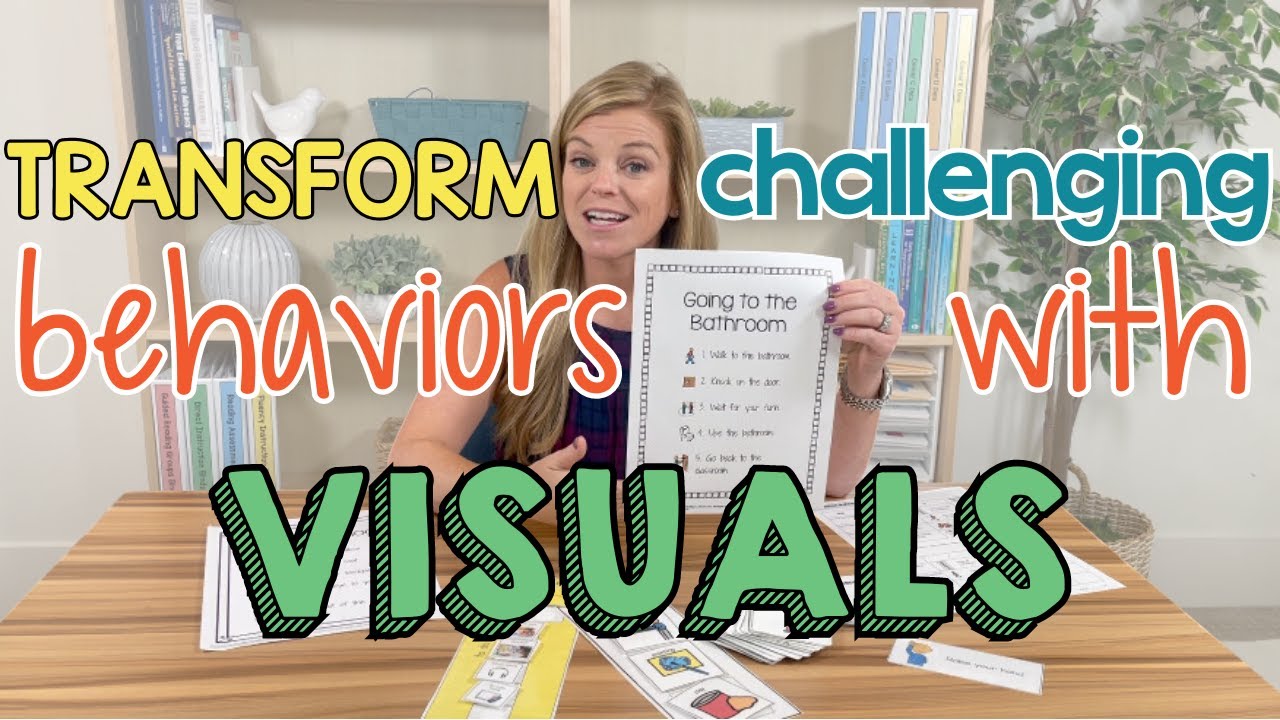
Object Schedules
Real, tangible objects representing each step (a toothbrush for tooth-brushing, a spoon for mealtime). These work well for younger children or children who are not yet reliably recognizing photos or icons.
Photo Schedules
Actual photographs of the child’s own environment, their bathroom, their backpack, their car seat. Photos tend to be the most concrete and recognizable option for children early in their visual comprehension.
Icon or Symbol Schedules
Standardized picture symbols representing activities. These are common in classrooms and therapy settings because they’re consistent and easy to reproduce, but they require the child to have already learned to interpret symbolic representation.
Written or Combination Schedules
For children who read or are learning to read, pairing a short word label with a picture builds literacy alongside the visual support, and it’s often the natural next step as a child’s schedule needs change over time.
How to Build a Visual Schedule at Home
Getting started doesn’t require special materials or a large upfront investment. A few printed pictures and some tape will work for a first attempt.
Step 1: Pick One Routine to Start
Don’t try to schedule the entire day at once. Choose the single routine causing the most friction right now either the morning routine, bedtime, or leaving the house and build a schedule for just that.
Step 2: Choose the Right Format
Match the format to your child’s current level, using the categories above as a guide. If you’re unsure, start with photos. They’re the most universally understood starting point.
Step 3: Keep the Steps Concrete and Few
Three to five steps is usually enough for a first schedule. Too many steps at once can overwhelm rather than clarify. You can always add steps later as your child becomes comfortable checking and following the sequence.
Step 4: Place It Somewhere Consistent
A schedule that moves around the house loses its usefulness. Post it on the fridge, the bathroom mirror, or the bedroom door, wherever the routine actually happens, and keep it there.
Step 5: Reference It Consistently
The schedule only works if it becomes part of how you communicate the routine. Instead of saying “time for teeth,” walk your child to the schedule and let them see the step. Over time, many children begin checking it on their own.
Common Challenges and How to Adjust
Visual schedules don’t always work perfectly on the first attempt, and that’s normal. A few adjustments we’ve seen make a real difference:
- If your child ignores the schedule: the format may be too abstract. Try dropping back from icons to photos, or from photos to real objects.
- If a step causes distress every time: the schedule may be surfacing a genuine skill gap rather than just a transition issue. That’s useful information, and it’s worth mentioning to your child’s BCBA or therapist.
- If your child needs constant reminders to check it: placement may be the issue. Move the schedule to exactly where the transition happens, not somewhere nearby.
When to Bring in Professional Support
Many families build a basic visual schedule at home with real success. But when transitions remain difficult despite a consistent schedule, or when you’re not sure which format or routine to start with, that’s often a sign it’s time for guidance from a professional who can assess your child’s specific needs.
This is where parent training and in-home ABA therapy can help. A BCBA can observe your child’s actual routines, identify what’s driving the difficulty, and help you build a schedule that’s matched to your child’s exact skill level, then adjust it as your child grows more independent. For younger children, Early intervention ABA therapy builds these same visual supports into skill-building from the start, often before school-related routines even become a source of stress. Families balancing work schedules also use our weekend ABA and daycare-based ABA services to keep visual supports consistent across every setting a child spends time in.
Conclusion
Visual schedules turn one of the most stressful parts of the day, not knowing what happens next, into something a child can see, understand, and act on. Whether you start with a simple photo strip on the fridge or work with a BCBA to build a schedule matched to your child’s specific needs, the underlying goal is the same: replacing uncertainty with predictability, one routine at a time.
Serving families across Maryland, including Baltimore, Bethesda in Montgomery County, and Laurel in Prince George’s County, Admire ABA offers in-home ABA therapy, parent training, early intervention ABA therapy, daycare-based ABA, weekend ABA, and diagnostic services to help children build the skills and structure they need to thrive.
Contact us today to schedule a consultation and learn how our team can support your family’s routines at home.
Frequently Asked Questions
At what age should I introduce a visual schedule?
Many children begin benefiting from simple object or photo schedules as early as age two or three. There’s no strict age requirement. The right time is whenever transitions or routines are causing stress, regardless of age.
Do visual schedules work for nonverbal children?
Yes. Visual schedules are often especially effective for nonverbal children because they don’t rely on spoken language at all. Object and photo schedules in particular give nonverbal children a way to understand and anticipate routines independently.
Will my child become dependent on the schedule forever?
Not necessarily, and even if they do continue to rely on visual structure, that’s a legitimate, adaptive way of managing daily life rather than a limitation to correct. Many children gradually need fewer visual steps over time, and some transition to simple written checklists as they get older. If independence is a specific goal, a BCBA can help fade the schedule gradually rather than removing it all at once.
SOURCES:
- https://www.cdc.gov/autism/index.html
- https://teacch.com/
- https://afirm.fpg.unc.edu/
- https://www.autism.org.uk/
- https://raisingchildren.net.au/
- https://researchautism.org/