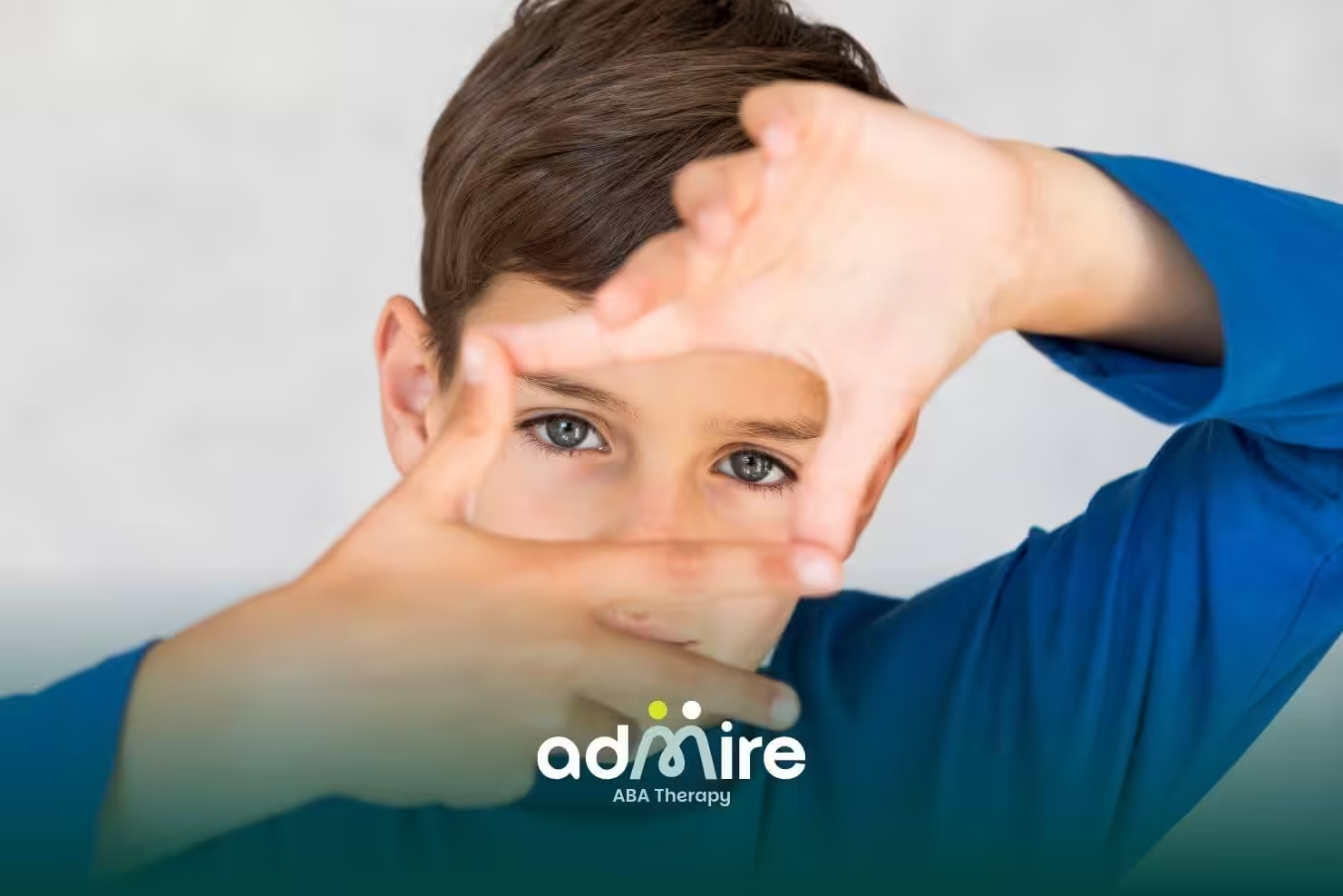

Many children with autism avoid eye contact because their brains process social and sensory information differently. Eye contact can feel overwhelming, distracting, or even uncomfortable, rather than meaningful or connecting. For some children, looking directly into someone’s eyes increases sensory input and makes it harder to focus on what is being said. Others may not naturally understand the social importance of eye contact or may find it confusing to interpret facial expressions and emotional cues.

Avoiding eye contact is not a sign of disrespect or lack of interest. In fact, many autistic children listen and engage better when they are not forced to look directly at someone. They may show attention through body orientation, listening quietly, or responding verbally instead of using typical eye gaze.
ABA therapy focuses on building functional communication, not forcing behaviors that cause distress. When eye contact is addressed, it is done gently and meaningfully, helping the child feel safe and comfortable while learning social engagement skills.
At Admire ABA, we help children develop communication and social understanding in ways that respect their sensory needs and learning styles. We also provide evidence-based personalized ABA therapy in Maryland.
Learn how we can support your child’s social development and confidence. Contact us today!
SOURCES:
https://my.clevelandclinic.org/health/treatments/25197-applied-behavior-analysis
https://childmind.org/article/controversy-around-applied-behavior-analysis
Teaching Functional Communication within ABA
byu/rips918 inABA
Why People With Autism Have Trouble Making Eye Contact
https://pmc.ncbi.nlm.nih.gov/articles/PMC3997654