
Introduction
If you’re a parent of an autistic child, you’ve probably had moments where you watched your child’s world unravel in seconds. Maybe it was a loud restaurant, a change in routine, or something as small as a tag inside a shirt. One minute everything seems okay, and the next, your child is screaming, crying, hiding under a table, or shutting down completely. You feel helpless. You wonder if you missed a sign. You wonder what you could have done differently.
You’re not alone, and more importantly, there are real, evidence-based strategies that can help.
Applied Behavior Analysis (ABA) therapy isn’t about forcing children to “behave better.” Modern, compassionate ABA is about understanding why a child is struggling and giving them tools to navigate a world that often feels overwhelming. When it comes to anxiety, meltdowns, and stress responses, ABA techniques can be genuinely life-changing, not just for the child but for the entire family.
Let’s walk through how it actually works.
Understanding What’s Really Happening During a Meltdown
Before we talk about techniques, it helps to reframe what a meltdown actually is. A meltdown is not a tantrum. A tantrum is usually goal-directed. The child wants something and is trying to get it. A meltdown is a nervous system response to overwhelm. The child has hit a wall, and their brain and body can no longer regulate.
Anxiety in autistic children often looks different from what it does in neurotypical kids. Instead of saying “I’m worried,” a child might pace, repeat questions, refuse to leave the car, or have what looks like a sudden behavioral outburst. The stress response, often called fight, flight, freeze, or fawn, kicks in when the child perceives a threat, whether that threat is a crowded grocery store, an unexpected schedule change, or a sensory input most people barely notice.
The good news? Once we understand the function behind the behavior, we can intervene in ways that actually help.
Antecedent Strategies: Preventing the Storm Before It Starts
One of the most powerful tools in ABA is something called antecedent strategies. Think of antecedents as everything that happens before a challenging behavior. If we can identify and modify those triggers, we can often prevent the meltdown altogether.
Here are some antecedent strategies that work especially well for anxiety and stress:
Visual schedules. Many autistic children experience anxiety because they don’t know what’s coming next. A visual schedule, whether a simple picture board or a digital app, gives them predictability. In our sessions, we’ve seen children go from refusing to leave the house in the morning to confidently transitioning through their day once they could see what was coming.
Priming and previewing. This means walking your child through an upcoming event before it happens. Going to the dentist on Thursday? Talk about it on Monday. Look at pictures. Practice opening the mouth. Drive past the building. The more familiar the experience becomes, the less the nervous system flags it as a threat.
Environmental modifications. Sometimes the simplest changes make the biggest difference. Dimming overhead lights, using noise-canceling headphones, removing tags from clothing, or creating a quiet “calm corner” at home can reduce the sensory load that contributes to meltdowns.
Choice-giving. Anxiety often spikes when a child feels they have no control. Offering two acceptable choices, “Do you want to brush teeth first or put on pajamas first?”, restores a sense of agency without creating a power struggle.
Transition warnings. A sudden “Time to go!” can feel jarring. Instead, try “Five more minutes, then we’re leaving the park.” Timers, songs, and countdowns help the brain prepare for change.
Functional Communication Training: Giving Kids the Words They Need
Here’s something we tell families all the time: behavior is communication. When a child screams, hits, or runs away, they’re telling us something. The problem is, those behaviors are often the only tools they have.
Functional Communication Training (FCT) is an ABA technique that teaches children a more effective way to communicate what they need, whether that’s through words, sign language, picture exchange systems (PECS), or a speech-generating device.
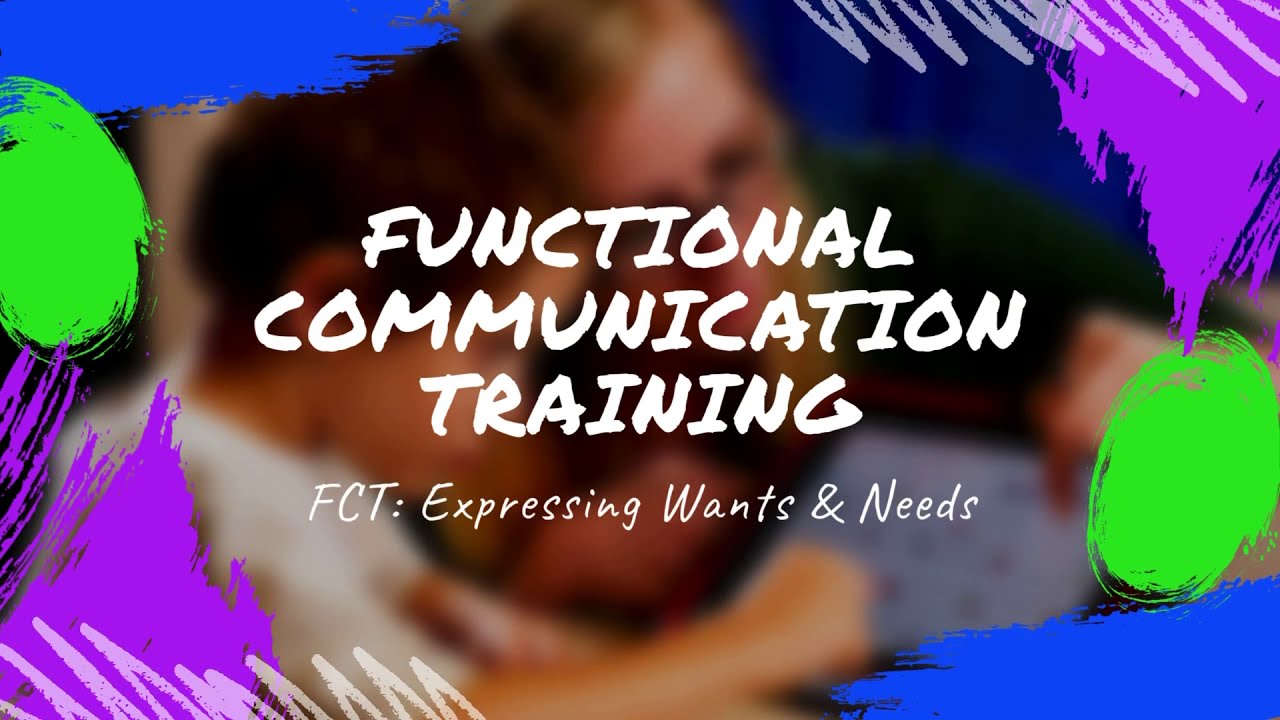
Here’s how it works in practice. Let’s say a child screams every time their sibling enters their room. Through assessment, we might discover that the function of that screaming is “I need space.” FCT would teach the child to say (or sign, or tap a picture of) “I need a break” or “Please leave my room.” Once the child learns this replacement behavior actually works, meaning it gets them what they need, the screaming naturally decreases.
We worked with a family whose 6-year-old was having multiple meltdowns a day, often seemingly out of nowhere. After careful observation, our team realized many of the outbursts happened when he was hungry but couldn’t articulate it. We introduced a simple picture card system with images for “hungry,” “thirsty,” “tired,” and “too loud.” Within a few weeks, the meltdowns dropped dramatically. He wasn’t suddenly less anxious. He just finally had a way to tell us what he needed before reaching the breaking point.
FCT is one of the most well-researched and effective interventions in ABA, and it works precisely because it respects the child. It assumes they have something to say, and our job is to help them say it.
Teaching Coping and Self-Regulation Skills
Beyond preventing meltdowns and improving communication, ABA can directly teach coping strategies that children can use when they start feeling overwhelmed.
This might include:
Deep breathing routines paired with visual cues, like blowing out birthday candles or smelling a flower. Progressive muscle relaxation is taught playfully through activities like “squeeze the lemon” or pretending to be a wet noodle. Identifying emotions using feelings charts or thermometers, so children learn to recognize the early signs of stress before they escalate. Practicing “if-then” scenarios, so when something stressful happens, the child has a rehearsed response ready.
The key is teaching these skills during calm moments, not in the middle of a meltdown. You can’t learn to swim while you’re drowning. We practice the skills repeatedly when the child is regulated, so when stress hits, the response is already familiar.
Why Parent Training Matters So Much
One of the most important things we’ve learned over years of working with families is this: the child spends far more hours with their parents than with any therapist. If the strategies only work during therapy sessions, they’re not really working.
That’s why parent training is such a core part of what we do. When parents understand the why behind their child’s behavior, when they have tools for antecedent management, and when they know how to reinforce communication attempts at the dinner table or in the car, the gains stick. Families report less stress, better sleep, more enjoyable outings, and stronger relationships with their child.
Parent training isn’t about turning you into a therapist. It’s about giving you confidence and clarity in moments that used to feel impossible.
What This Looks Like in Real Life
A mom we worked with described her family’s life before ABA as “walking on eggshells.” Her 5-year-old son had multiple meltdowns daily, refused to leave the house, and couldn’t tolerate any change to his routine. Going to the grocery store was unthinkable.
We started with a functional assessment to understand his triggers. We introduced a visual schedule at home, taught him to request breaks using a picture card, and practiced short, low-stakes outings with lots of preparation. We also coached his parents on how to recognize early signs of dysregulation and intervene before he hit the point of no return.
Six months later, his mom sent us a video of him calmly picking out apples at the grocery store. Was every day perfect? No. But the meltdowns went from daily to occasional, and the family finally felt like they could breathe.
This is what compassionate, individualized ABA can do.
Conclusion
Anxiety, meltdowns, and stress responses are some of the hardest parts of raising an autistic child, but they’re also some of the most responsive to thoughtful, evidence-based intervention. ABA techniques like antecedent strategies, functional communication training, and coping skills instruction don’t just reduce challenging behaviors. They help children feel safer, more understood, and more capable in a world that often overwhelms them.
The goal isn’t to change who your child is. It’s to give them, and you, the tools to navigate life with more confidence, connection, and calm.
If you’re feeling overwhelmed by the constant cycle of meltdowns and anxiety, please know that support exists. With the right strategies, real change is possible, and you don’t have to figure it out alone.
Ready to Get Started?
At Admire ABA, we proudly serve families across Germantown, Rockville, and Silver Spring in Maryland, offering in-home ABA therapy, parent training, early intervention, and more. Our team specializes in compassionate, individualized care that helps autistic children thrive and gives parents the tools they need to feel confident every day.
Contact us today to schedule a consultation or learn more about how our ABA services in MD can support your family.
Frequently Asked Questions
What is the best ABA technique for reducing meltdowns in autistic children?
There isn’t one single “best” technique because every child is different, but functional communication training (FCT) and antecedent strategies are among the most effective. FCT helps children express their needs in a way that works, which reduces the frustration that often leads to meltdowns. Antecedent strategies, like visual schedules, transition warnings, and environmental adjustments, prevent meltdowns by addressing triggers before they escalate. A qualified BCBA can help identify which combination works best for your child.
Can ABA therapy help with anxiety in autistic kids?
Yes. While ABA doesn’t treat anxiety as a clinical diagnosis the way therapy with a psychologist might, it can significantly reduce the behaviors and triggers associated with anxiety. ABA teaches coping skills, builds predictability through routines, strengthens communication, and gradually exposes children to anxiety-provoking situations in a supported way. Many families notice their child becomes more flexible, confident, and able to handle daily challenges within a few months of consistent therapy.
How long does it take to see results from ABA for stress and behavior issues?
Most families begin to see small but meaningful changes within the first few weeks, especially when antecedent strategies and parent training are involved. Bigger shifts, like a clear reduction in meltdowns or improved emotional regulation, typically appear within three to six months of consistent therapy. Progress depends on factors like therapy hours, family involvement, and the individual child, but ABA is one of the most well-researched interventions for supporting autistic children long-term.
SOURCES
- https://pecsusa.com/pecs/?srsltid=AfmBOorhF7OF9F7UF8V3UJG2BT9w0k4mdBnhdNXQI-uiQobI5ieW2Son
- https://en.wikipedia.org/wiki/Picture_Exchange_Communication_System
- https://pmc.ncbi.nlm.nih.gov/articles/PMC1284381/
- https://www.ebsco.com/research-starters/communication-and-mass-media/picture-exchange-communication-system-pecs
- https://louisedawson.com/picture-exchange-communication/