Key Highlights
- Applied Behavior Analysis (ABA) therapy uses evidence-based strategies to teach essential social skills to children with autism spectrum disorder.
- ABA therapy breaks down complex social behaviors into smaller, manageable steps, making them easier to learn.
- Key techniques include positive reinforcement, modeling, role-playing, and social stories to encourage positive social behaviors.
- Individualized programs are created based on detailed assessments to meet each child’s unique needs and goals.
- Family involvement is crucial for reinforcing skills at home and ensuring consistency across different settings.
- The goal of ABA therapy is to improve social competence, foster meaningful relationships, and enhance overall quality of life.
Introduction
Navigating the social world can be challenging for children with autism spectrum disorder. As a parent, you want to see your child build meaningful connections and thrive in social situations. This is where ABA therapy can make a significant difference. This evidence-based approach focuses on social skills development by breaking down complex interactions into understandable steps. This guide will explore how ABA therapy helps children with autism enhance their social skills, build confidence, and improve their overall quality of life.
Understanding ABA Therapy and Its Role in Social Skills Development
Applied Behavior Analysis (ABA) therapy is a scientifically validated approach that systematically teaches crucial social skills. For children with autism, it provides a structured path to understanding social cues, engaging with peers, and building lasting friendships. Through evidence-based techniques, ABA helps improve social behaviors and supports overall skill development.
We’ll look closer at what ABA is, its core principles, and how it compares to other interventions. Let’s explore how this therapy can support your child’s social journey.
Supporting your child's social connections
Our ABA programs are built around your child's strengths and interests, helping them connect with others in ways that feel natural to them.
See how we can help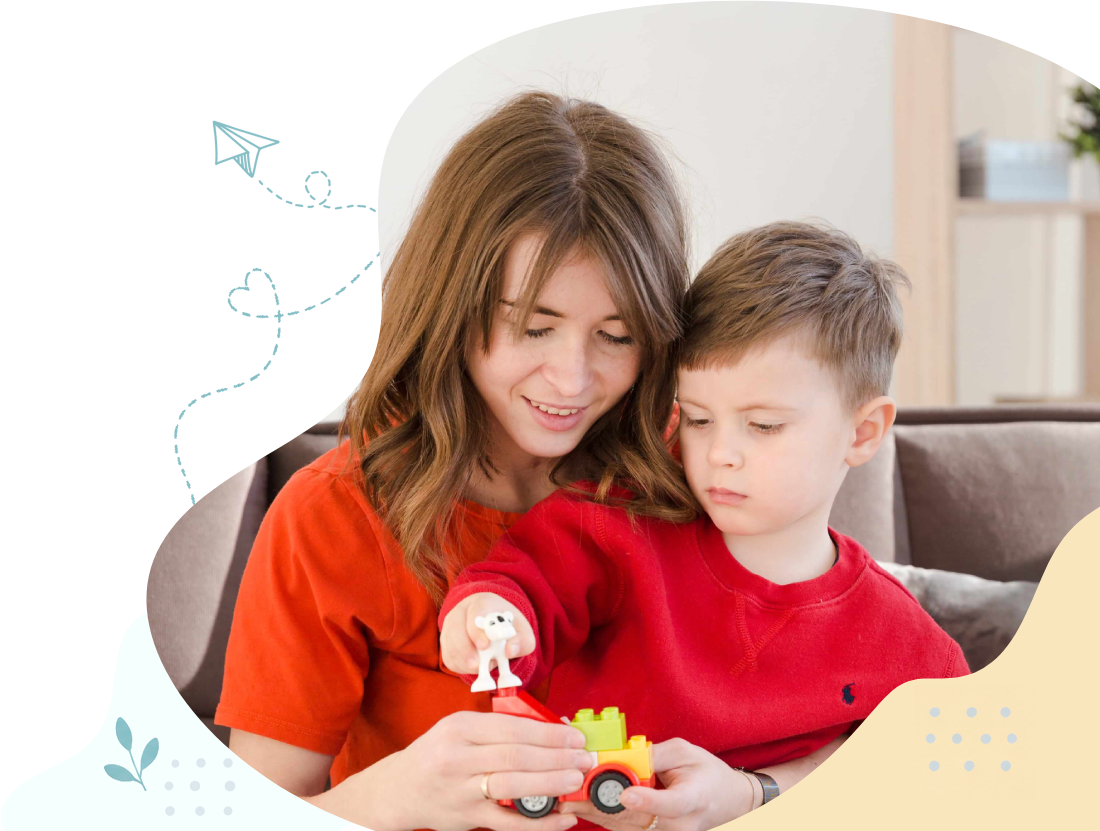
Defining Applied Behavior Analysis (ABA) and How It Works
Applied Behavior Analysis (ABA) is a therapeutic approach rooted in the science of learning and behavior. At its core, ABA therapy uses specific techniques to encourage helpful behaviors and reduce those that may be harmful or interfere with learning. It is a highly structured and data-driven method for skill acquisition.
So, how does ABA therapy help children with autism improve their social skills? The process begins with a detailed assessment to identify specific areas where a child needs support. From there, a behavior analysis professional designs a personalized plan. This plan breaks down complex social skills, like initiating a conversation or sharing, into small, manageable steps.
Each step is taught systematically using prompts and positive reinforcement. For instance, in our sessions, we might use a picture card to prompt a child to say “hello” and then offer praise when they do. This step-by-step process builds a strong foundation for more complex social interactions, helping children feel more confident and successful.
Key Principles of ABA Therapy for Children with Autism
ABA therapy is considered effective because it is built on a foundation of clear, evidence-based principles. These principles guide ABA therapists in creating effective and individualized programs that promote positive behaviors. The approach is systematic, ensuring that progress is both achievable and measurable.
One of the cornerstones of ABA is positive reinforcement. When a child demonstrates a desired social skill, they receive a reward, such as praise, a favorite toy, or a fun activity. This makes them more likely to repeat the behavior in the future. This focus on encouragement helps build confidence and a positive association with social learning.
The effectiveness of ABA therapy also comes from its commitment to data collection and objective analysis. Core principles include:
- Individualized Goals: Programs are tailored to the unique needs of each child.
- Data Collection: Therapists consistently track progress to measure what’s working.
- Positive Reinforcement: Desired behaviors are rewarded to increase their frequency.
- Systematic Instruction: Skills are broken down and taught in a structured way.
- Generalization: Skills are practiced in different settings to ensure they can be used anywhere.
ABA Therapy Compared to Other Social Skills Interventions
When considering options for social skills training, it’s helpful to understand what sets ABA therapy apart. While many interventions aim to improve social development, ABA’s methodology is distinct. Its primary difference lies in its highly structured, data-driven approach to teaching behaviors.
Unlike some therapies that may focus more on general social understanding, ABA breaks down every social skill into observable and measurable components. For example, instead of just talking about “being a good friend,” an ABA program would target specific actions like “sharing a toy for two minutes” or “making eye contact when greeting a peer.” This precision allows therapists to track progress objectively.
This systematic nature ensures that the path to social competence is clear and progress is continually monitored. Here’s a simple comparison:
| Intervention Type | Primary Focus | Key Difference |
| ABA Therapy | Observable and measurable behaviors | Uses data to track progress and individualize instruction. |
| Traditional Social Skills Groups | Group interaction and general social rules | Often less structured and may not track individual data. |
| Play Therapy | Emotional expression through play | Focuses on emotional processing rather than specific skills. |
The Importance of Social Skills for Children with Autism
For children on the autism spectrum, developing social skills is fundamental to building meaningful relationships and navigating daily life. Strong social communication abilities open doors to friendships, better school experiences, and greater self-confidence. These skills are not just about talking to others; they are about understanding and being understood.
Improving social skills also has a direct impact on emotional regulation. When children can express their needs and interpret the feelings of others, they are less likely to feel frustrated or isolated. Let’s look at the specific skills that matter most and the challenges children often face.
Core Social Skills That Support Everyday Life
A number of essential social skills form the foundation for successful interaction in everyday life. These are the building blocks that allow children to connect with family, peers, and the community. Without them, simple activities like playing at the park or participating in class can feel overwhelming.
Through ABA therapy, children can learn these specific skills in a structured and supportive way. Therapists focus on breaking down complex interactions into smaller parts. For example, learning to interpret facial expressions might start with identifying “happy” and “sad” faces on picture cards before moving on to real-life situations. This gradual approach builds competence and confidence.
Some of the core communication skills we often target in our ABA sessions include:
- Making and maintaining eye contact
- Taking turns in a conversation or game
- Initiating greetings and farewells
- Understanding and using appropriate body language and facial expressions
- Recognizing and responding to social cues from others
Common Social Challenges Experienced by Children with Autism
Children on the autism spectrum often experience unique social challenges that can make interactions feel confusing or stressful. These social skill deficits are not a matter of choice but are rooted in how their brains process information. For example, understanding unspoken social rules, like knowing not to stand too close to someone, can be difficult.
Many children face challenges interpreting nonverbal cues like body language, tone of voice, or facial expressions. This can lead to misunderstandings in social situations. A friendly joke might be taken literally, or a peer’s frustration might go unnoticed. Participating in group activities can also be tough, as it requires coordinating actions and communicating with multiple people at once.
Another common challenge is initiating and maintaining conversations. A child might have a deep interest in a particular topic but struggle to talk about anything else or recognize when the other person is no longer engaged. These difficulties can sometimes lead to social anxiety or withdrawal, making it even harder to practice and learn new skills.
How Social Skills Impact Emotional Wellbeing and Independence
The development of social skills is deeply connected to a child’s emotional wellbeing and journey toward greater independence. When children learn how to navigate social settings effectively, they experience more positive interactions, which boosts their self-esteem and reduces feelings of anxiety or isolation. This success fosters a better overall quality of life.
Strong social skills also play a critical role in emotional regulation. A child who can communicate their needs and understand the feelings of others is better equipped to manage their own emotions. For example, being able to say, “I need a break,” can prevent a meltdown in an overwhelming situation. This ability to self-advocate is a key step toward independence.
Ultimately, ABA therapy is considered effective because it systematically builds these skills, leading to meaningful relationships and a greater sense of belonging. As children become more confident in their social abilities, they are more willing to participate in school, family, and community activities, paving the way for a more independent and fulfilling future.
How ABA Therapy Improves Social Skills in Children with Autism
ABA therapy offers a structured and effective pathway to improving social skills by focusing on the individual needs of each child. Instead of a one-size-fits-all approach, ABA programs are carefully designed to target specific goals, leading to meaningful skill acquisition and social skill development. This personalization is what makes the therapy so powerful.
We will now examine how these programs are designed, how goals are set and measured, and share some real-life examples of the progress children can make.
Individualized Program Design Based on Assessment
The journey with ABA therapy begins with a comprehensive assessment to understand your child’s unique needs and strengths. This initial evaluation is critical because it allows therapists to identify specific needs related to social communication, interaction, and behavior. We use tools like the ABLLS-R or VB-MAPP, along with direct observation, to get a complete picture of your child’s abilities.
Based on this assessment, we design a highly individualized program tailored to your child’s needs. ABA early interventions are not generic; they are created to address the exact skills your child needs to develop. For example, if an assessment shows a child struggles with turn-taking, the program will include specific activities and goals to practice that skill in a structured environment.
This personalized approach is how ABA therapy helps children improve their social skills so effectively. By focusing on what your child needs most, we can create a clear and manageable path to success. The program is a living document, constantly adjusted based on your child’s progress to ensure it remains relevant and effective.
Setting Measurable Social Goals in ABA Sessions
A key component of ABA therapy is setting clear and measurable social goals. Vague objectives like “be more social” are replaced with specific, actionable targets. For example, a goal might be “John will initiate a greeting to a peer in three out of five opportunities during playtime.” This precision allows everyone therapists, parents, and the child to know exactly what success looks like.
During ABA sessions, therapists use data collection to track progress toward these goals. Every attempt to use a new skill is recorded, providing objective information on how the child is doing. This process allows for immediate feedback, so the child understands what they did correctly and what they can improve upon. This constant loop of practice, feedback, and measurement is fundamental to skill development.
This data-driven approach allows therapists to make informed decisions about the intervention. If a child is not making progress, the data will show it, and the therapist can adjust the teaching strategy. This ensures that ABA sessions are always productive and focused on moving the child forward in manageable steps.
Real-Life Examples of Progress in Social Skill Development
Yes, the progress we see in social skill development through ABA therapy is one of the most rewarding aspects of our work. We’ve witnessed countless real-life examples of children making significant improvements that enhance their quality of life. These new skills open up a world of social connection that was previously out of reach.
For example, we worked with a young girl, Maya, who initially avoided eye contact and never initiated play with her peers. After several months of targeted ABA interventions, she began greeting her classmates by name and even started inviting them to join her in activities. Her parents were thrilled to hear she had made her first real friend at school.
These transformations are common and demonstrate the power of consistent, individualized therapy. Here are a few other real-life examples of progress we’ve seen:
- A child learning to wait their turn in a game without getting upset.
- A teen successfully navigating a back-and-forth conversation about a non-preferred topic.
- A young child learning to recognize a friend is sad and offering a comforting gesture. These changes in social behaviors lead to more positive interactions and a happier, more connected life.
Effective ABA Strategies Used to Teach Social Skills
ABA therapy employs a variety of proven strategies to teach social skills effectively. These methods are designed to break down complex social behaviors into simpler components, making them easier for children to learn and practice. From structured training to more naturalistic approaches, these ABA strategies are tailored to fit each child’s learning style.
This variety of techniques, including behavioral skills training and the use of visual supports, ensures a comprehensive approach to skill development. Let’s explore some of the most common and effective methods used to improve social communication and interaction.
Discrete Trial Training (DTT) and Natural Environment Teaching (NET)
Two of the main ABA strategies used to teach social skills are Discrete Trial Training (DTT) and Natural Environment Training (NET). Though different in their application, they both play a crucial role in skill development. DTT is a highly structured method that breaks down skills into small, “discrete” trials.
In a DTT session, a therapist might present a specific instruction, prompt the correct response, and provide immediate reinforcement. For example, the therapist might hold up a picture of a smiling face and say, “What is this feeling?” This repetition in a structured environment helps solidify new skills in manageable steps.
On the other hand, Natural Environment Training (NET) focuses on teaching skills within the child’s everyday routines and activities. Instead of a formal session, the therapist uses naturally occurring opportunities to practice skills. For instance, during snack time, the therapist might encourage the child to ask a peer for a cracker. NET helps children generalize skills to real-world situations.
Key aspects of these methods include:
- DTT: One-on-one, structured instruction.
- NET: Teaching in everyday, natural settings.
- Both use reinforcement to encourage desired behaviors.
- Both break down skills into smaller components.
Using Modeling, Role-Playing, and Social Stories
Beyond DTT and NET, ABA therapy uses several other powerful techniques like modeling, role-playing, and social stories. Modeling involves the therapist or a peer demonstrating a desired social behavior, such as how to join a game. The child can then watch and imitate the behavior, making it easier to learn than just hearing a verbal explanation.
Role-playing gives children a safe space to practice these new skills. A therapist might set up common social scenarios, like ordering food at a restaurant or asking a friend to play. This form of behavioral skills training allows children to rehearse their responses, receive feedback, and build confidence before trying the skill in a real-life situation. We’ve seen this be incredibly effective for practicing conversational turn-taking.
Social stories are another valuable tool. These are short, personalized narratives that describe a social situation and provide clear instructions on how to respond appropriately. For example, a story might explain what happens at a birthday party and suggest ways to interact with other guests. This helps reduce anxiety by making unfamiliar social scenarios more predictable.
Reinforcement Techniques That Encourage Social Behaviors
Reinforcement techniques are at the heart of why ABA therapy is so effective for enhancing social skills. The core idea is simple: when a behavior is followed by something rewarding, it is more likely to happen again. Positive reinforcement is the key to motivating children to practice and use new social behaviors.
In our ABA sessions, reinforcement can take many forms. For some children, verbal praise like “Great job sharing!” is highly motivating. For others, a tangible reward like a sticker, a few minutes with a favorite toy, or a token for a token board works best. The key is to find what is most meaningful to the individual child. This immediate feedback helps them connect their action with a positive outcome.
Visual aids, such as “first-then” boards, can also be used as reinforcement techniques. For example, “First, you say hi to a friend, then you get to play on the swings.” This makes the expectation clear and the reward tangible. By consistently applying these strategies, we encourage the repetition of appropriate social behaviors until they become natural habits.
Involving Parents, Families, and Educators in Social Skills Training
For social skills training to be truly successful, it cannot happen in a bubble. The involvement of parents, family members, and educators is essential. When everyone in a child’s life works together, it creates a consistent and supportive environment where new skills can flourish. This collaboration is a critical part of the ABA process.
Parent participation and teamwork between therapists and school personnel help ensure that skills learned in therapy are carried over into home and school settings. Let’s talk about how we can build this team-based approach for the best possible results.
Parent Participation and Home-Based ABA Practices
Parents play a vital role in supporting their child’s social skills development during ABA therapy. You are your child’s first and most important teacher, and your involvement is crucial for success. Through parent training, we empower you with the tools and strategies to continue the learning process at home.
This parent participation might involve learning how to use reinforcement effectively or how to create opportunities for social practice during daily routines. For example, you could practice turn-taking during a family board game or encourage your child to greet visitors at the door. These home-based ABA practices help generalize skills from the therapy room to real life.
By creating a supportive environment at home, you reinforce the positive behaviors your child is learning. Your consistency helps solidify skill development and shows your child that these skills are important in all aspects of their life. You become a key partner in their progress, celebrating every milestone along the way.
Collaboration Between Therapists and School Personnel
Just as parents play a crucial role at home, collaboration between ABA therapists and school personnel is essential for supporting a child in their educational environment. The classroom, playground, and lunchroom are prime settings for practicing social skills. When teachers and therapists are on the same page, the child receives consistent support throughout their day.
This collaboration often begins with sharing the child’s goals and progress. ABA therapists can provide teachers with specific strategies that have been successful in therapy. For example, a therapist might suggest using a visual schedule to help a child navigate group activities or provide a social story that prepares them for a school assembly.
This teamwork ensures consistency in how social skills are prompted and reinforced. If a child is working on raising their hand to speak in therapy, having the teacher recognize and praise that same behavior in the classroom is incredibly powerful. This unified approach helps the child succeed socially and academically.
Building Consistency Across Environments for Best Results
One of the main goals of ABA programs is to help children use their new skills in all parts of their lives. This is known as generalization, and it relies heavily on consistency. When a child receives the same messages and reinforcement at home, at school, and in therapy, skill acquisition happens much faster.
A challenge some children face is learning a skill in a structured environment but struggling to apply it in more chaotic, natural settings. Building consistency helps bridge this gap. For example, if a child is learning to ask for help, practicing this with their therapist, parents, and teachers creates a supportive environment where they feel safe to try the skill anywhere.
Creating this consistency requires open communication among everyone involved in the child’s care. Regular team meetings and shared progress notes ensure that everyone is using the same language and strategies. This collaborative effort makes the learning process smoother and helps the child feel confident using their social skills no matter where they are.
Conclusion
ABA therapy plays a crucial role in enhancing social skills for children with autism. By utilizing tailored strategies such as Discrete Trial Training and Natural Environment Teaching, therapists can help children navigate social interactions more effectively. We’ve seen remarkable transformations through targeted interventions, allowing children to develop core social skills that promote emotional well-being and independence. Engaging parents, families, and educators in this process ensures that these skills are reinforced consistently across different environments, leading to lasting change.
At Admire ABA, we provide personalized, evidence‑based ABA therapy in Maryland that is designed to support social development, communication, and confidence. Our compassionate team works closely with families and educators to ensure progress happens at home, in school, and in the community.
Discover how tailored ABA strategies can support your child’s growth. Contact us today!
Frequently Asked Questions
Is ABA therapy effective for all children with social skill difficulties, or just those with autism?
While ABA therapy is widely known for its effectiveness with the autism spectrum, its principles can benefit any child with social skill difficulties. The approach is highly adaptable to meet specific needs, making it a valuable tool for improving social competence in children with various developmental challenges.
How long does it take to notice improvements in my child’s social skills with ABA therapy?
The timeline for social skills development varies for each child, as ABA programs are tailored to individual needs. Some families see progress in a few months, while others may see significant improvements over a longer period. Consistent practice and the complexity of the goals for skill acquisition play a large role.
What are some challenges children may encounter when learning social skills through ABA?
Children may face challenges such as generalizing skills from a structured environment to natural settings. Overcoming long-standing social skill deficits can also be frustrating, and some may struggle with emotional regulation when practicing new, appropriate social behaviors. Consistency and patience are key to overcoming these hurdles.
SOURCES:
- https://medium.com/tryaba/vb-mapp-vs-ablls-r-abde15b7cfb
- https://my.clevelandclinic.org/health/treatments/25197-applied-behavior-analysis
- https://online.regiscollege.edu/blog/aba-therapy-examples
- https://www.reddit.com/r/ABA/comments/159fkcb/abblsr_vbmapp_or_both/?utm_source=share&utm_medium=mweb3x&utm_name=post_embed&utm_term=1&utm_content=1
- https://www.scribd.com/document/683704695/Ablls-r-to-Vb-mapp-Comparison-1#download&from_embed