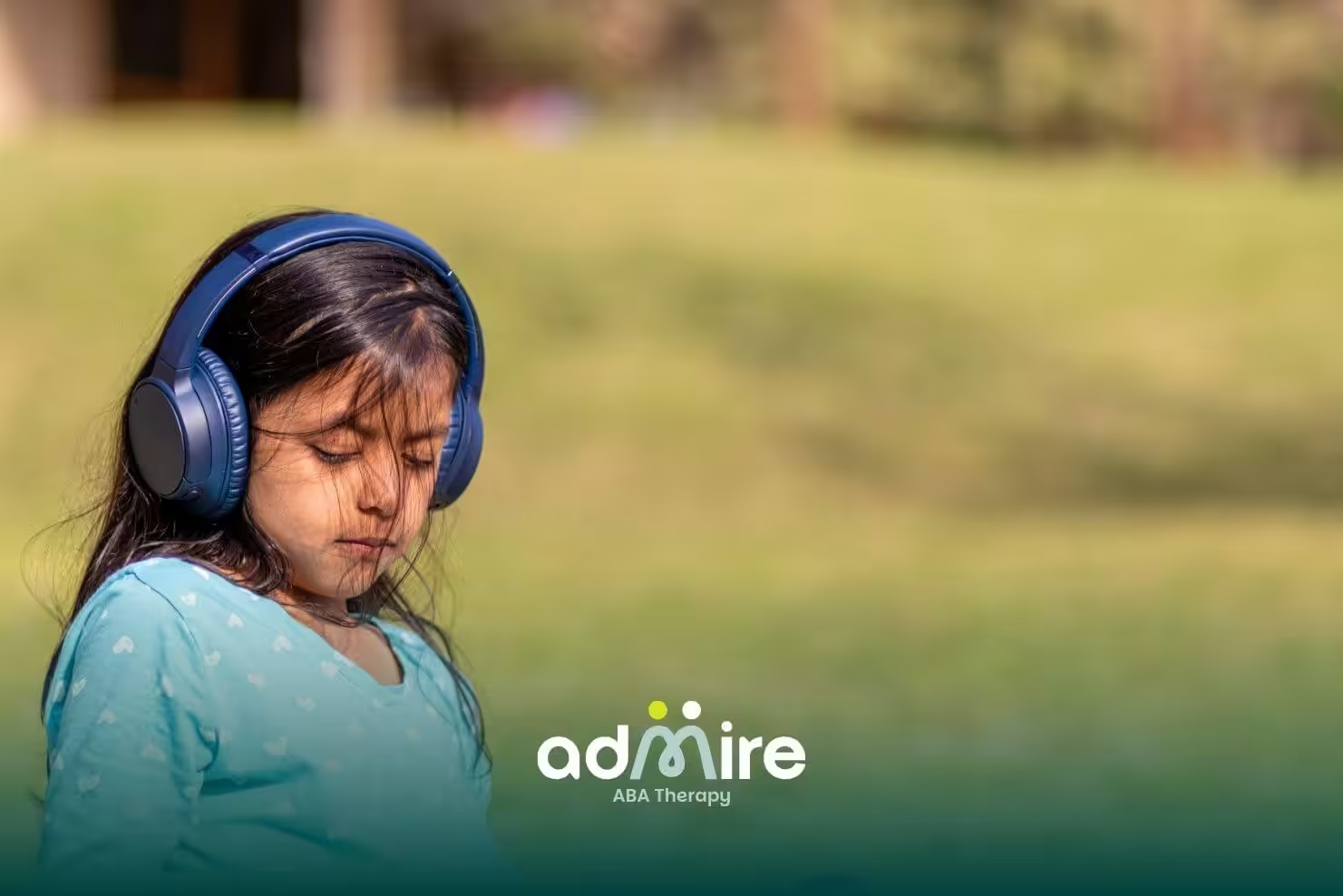

Introduction
For many children on the autism spectrum, the world is louder than it should be. A grocery store hum that most shoppers tune out can feel like a freight train. A classroom transition bell can trigger a meltdown that lasts an hour. Fluorescent light buzz, hand dryers in public restrooms, vacuum cleaners, and even other children chewing, these everyday sounds can flood the nervous system and make regulation nearly impossible.
This is where noise-canceling headphones come in. Used well, they’re one of the most accessible and affordable sensory regulation tools available. Used poorly, they can actually slow down the skills you’re working hard to build. This guide walks parents, caregivers, educators, and therapists through the real-world picture, when headphones help, when they don’t, what to look for, and how to introduce them in a way that actually works.
Why Sound Hits Differently for Autistic Children
Sensory processing differences are part of the diagnostic criteria for autism spectrum disorder, and auditory hypersensitivity is one of the most common presentations. Roughly half to two-thirds of autistic children experience some form of sound sensitivity, though the way it shows up varies enormously from child to child.
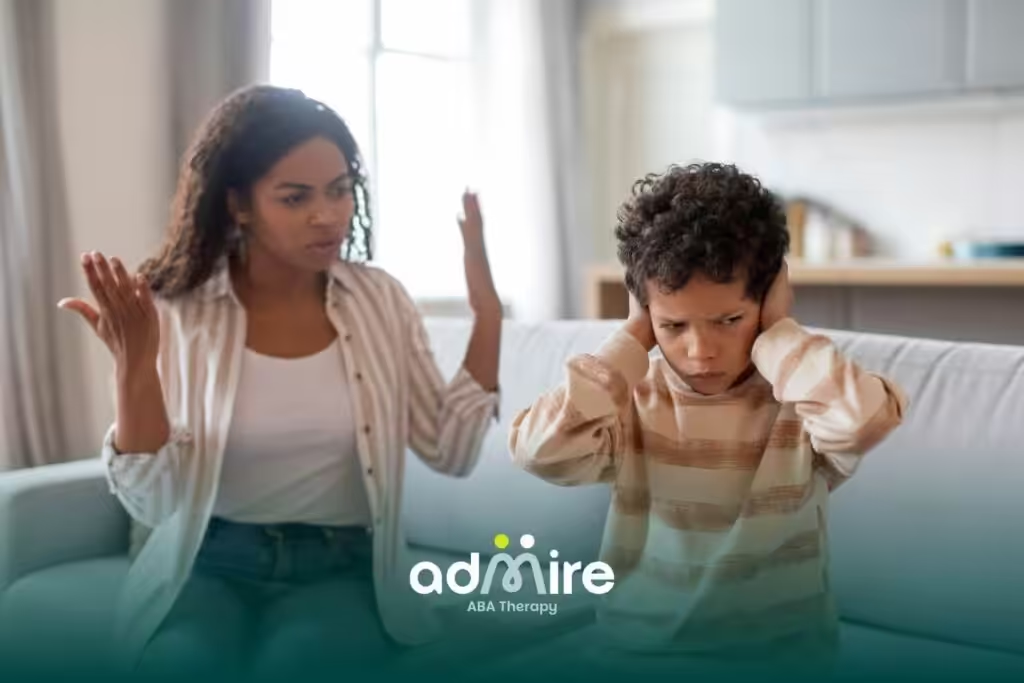
What looks like “bad behavior”, covering the ears, bolting from a room, refusing to enter a building, sudden aggression or shutdown, is often a nervous system that’s been pushed past its threshold. The child isn’t choosing to react. Their auditory processing genuinely receives more signal and filters less of it than their neurotypical peers.
Headphones don’t fix the underlying sensory difference. What they do is lower the input, which gives the brain more capacity to focus on the things that matter: a teacher’s instructions, a parent’s voice, a play partner’s bid for attention, or just the work of being present in a busy space.
When Noise-Canceling Headphones Genuinely Help
Headphones earn their place as a regulatory tool in specific situations. The clearest wins:
Predictably loud environments. Birthday parties, sporting events, fireworks, airports, concerts, parades, school assemblies, and indoor play centers are textbook examples. A child who would otherwise miss the entire event, or melt down halfway through, can often stay regulated and participate.
Transitions between sensory environments. The walk from a quiet home into a busy supermarket is a sudden jump in auditory load. Headphones can soften that jump and prevent a meltdown before it starts.
Unpredictable sound triggers. Some children have specific triggers, such as a baby crying, a dog barking, or a toilet flushing in a public bathroom. If you can’t predict when it’ll happen, headphones give the child a way to handle it when it does.
Focused work or homework. When a child needs to concentrate but the household is loud, headphones can preserve attention for a learning task.
Travel. Car horns, train announcements, and airplane cabin noise are common dysregulators. Headphones turn a difficult trip into a manageable one.
In our in-home sessions, we’ve seen children who previously refused to leave the house for any group activity gradually expand their world once headphones became a reliable tool in their backpacks. One family we worked with described their child’s first calm trip through a busy farmers’ market as “the first time we ever saw him notice the produce instead of the noise.”
When Headphones Don’t Help and When They Hurt
This is the part most online guides skip, and it matters.
When the trigger isn’t auditory. Sensory overload can come from lighting, crowds, smells, unexpected touch, or internal states like hunger or tiredness. Putting headphones on a child who’s overwhelmed by fluorescent lights doesn’t address the actual problem and can leave everyone frustrated.
When they become an avoidance tool. Headphones are meant to support participation, not replace it. If a child wears them constantly and never builds tolerance for everyday sounds, the sensory threshold can actually narrow over time. The brain, like any system, calibrates to its input. Permanent isolation from sound trains the nervous system to find normal sound levels intolerable.
When they block communication. Heavy over-ear models can muffle speech to the point that a child misses instructions, social bids, or safety information. A child wearing headphones in a classroom who never hears the teacher isn’t being supported. They’re being unintentionally excluded.
When they’re used to suppress communication. This is a hard one to say, but it’s true: sometimes headphones get used when a child is trying to express discomfort, and the adult around them wants the behavior to stop. Headphones shouldn’t substitute for understanding what a child is communicating.
During skill-building sessions. In therapy, we often want a child to gradually tolerate the very inputs that are hard for them. Wearing headphones during a graded exposure plan defeats the purpose. The right call depends on the goal of the session, and a Board Certified Behavior Analyst (BCBA) can help you map that out.
The simplest rule we offer parents: headphones are a bridge, not a wall. They help a child get into and through a hard environment. They don’t replace the work of building tolerance, communication, and coping skills.
Recommended Types and What to Look For
Not all hearing protection is the same, and the right choice depends on the child and the situation.
Passive ear defenders (earmuffs). These are physical sound blockers, no batteries, no electronics. They typically reduce ambient noise by 20–30 decibels, which is enough to take the edge off most environments without total silence. They’re durable, affordable, and a strong first option for younger children or kids who chew on or drop their gear. Popular brands in this category include 3M Peltor Kids, Banz, and Alpine Muffy Kids.
Active noise-canceling headphones. These use microphones and inverse sound waves to cancel out low-frequency ambient noise (engines, HVAC hum, crowd murmur). They’re effective for travel and predictably hummy environments, but less effective against sudden high-pitched sounds. They need charging and tend to be more expensive.
Bone conduction headphones. These sit in front of the ear and transmit sound through the cheekbones, leaving the ear canal open. Some children prefer them because they don’t feel “closed in.” They’re not noise-canceling in themselves but can be paired with calming audio.
Earplugs designed for sensory sensitivity. Brands like Loop and Flare Calmer offer discreet earplugs that reduce volume without fully blocking sound. These suits older children, teens, and adults who want regulation support without the visibility of over-ear models.
A few practical features to check: a comfortable, low-clamp fit (tight headphones become their own sensory issue), washable padding, and durability against drops. For younger children, look for a model rated for their age and head size. Adult headphones often slide off or pinch.
How to Introduce Headphones the Right Way
A child handed a pair of headphones in the middle of a meltdown will almost always reject them. The introduction matters as much as the product.
Start at home, in a calm moment. Let the child see the headphones, hold them, and explore them without pressure. No expectation to wear them yet.
Pair them with something enjoyable. Put them on during a favorite activity for short periods, five seconds, then ten, then thirty, and reinforce the experience. This is classic shaping. The headphones become associated with good things, not with being told what to do.
Model wearing them. Children take cues from caregivers. If you wear a pair, talk about how they feel, and treat them as normal, the child is more likely to accept them as part of everyday life.
Practice in low-stakes environments before high-stakes ones. A short trip to a quiet store before attempting a stadium. A ten-minute car ride before a long flight. Build the skill gradually.
Give the child agency. Whenever possible, let the child decide when to put them on and take them off. A child who feels in control of the tool will use it more skillfully than one who has it forced onto their head.
Teach a request signal. For children who use AAC, picture cards, or sign, build a way to ask for headphones. For verbal children, practice the phrase “I need my headphones.” Self-advocacy is the long-term goal.
In our parent training program, families learn how to fold these introduction steps into daily routines so the headphones become part of the child’s regulation toolkit, not a one-off rescue device.
Working With Your ABA Team
Sensory regulation tools work best inside a broader plan. A skilled BCBA can help you decide where headphones fit, where they don’t, and what to build alongside them, communication around discomfort, coping strategies that don’t depend on equipment, and tolerance for the environments your child needs to be in.
This is particularly important for families navigating school accommodations. A 504 plan or IEP that includes noise-canceling headphones as a sensory tool is a reasonable accommodation request in most public schools, and a behavior analyst can help document the need and the data behind it. Our therapists work with families in Glen Burnie and across Maryland on exactly this kind of planning, from in-home sessions to coordinating with school teams.
For very young children, sensory regulation support is often part of an early intervention plan. The earlier the toolkit gets built, the easier transitions, preschool, and group settings tend to be.
Conclusion
Noise-canceling headphones aren’t a cure for sensory differences, and they’re not appropriate for every moment. But used thoughtfully, in the right situations, with the right type, introduced the right way, and inside a broader regulation plan, they’re one of the highest-impact tools a family can add. The goal isn’t to silence the world. It’s to give a child the bandwidth to be in it, participate, learn, and connect.
If you’re just starting out, begin with a passive ear defender for predictable loud environments, introduce it during calm moments at home, and watch carefully for the situations where it genuinely helps. Track what works. Talk to your ABA team about how it fits into your child’s overall plan. And remember that the long-term goal is a child who can advocate for what they need, headphones being just one of many ways they do that.
Ready to Build a Personalized Sensory Regulation Plan?
At Admire ABA, we help families across Maryland turn everyday sensory challenges into manageable moments. Our team provides in-home ABA therapy, parent training, daycare-based ABA, weekend sessions, early intervention, and diagnostic services tailored to your child’s specific needs, including building sensory regulation skills that go beyond any single tool. We proudly serve families in Glen Burnie, Baltimore, and Annapolis, with therapists who come to where your child is most comfortable.
Contact us today to schedule a consultation and find out how individualized ABA support in MD can help your child thrive.
Frequently Asked Questions
Are noise-canceling headphones safe for children with autism to wear daily?
They’re generally safe when used appropriately. The concern isn’t safety in the medical sense, passive ear defenders carry essentially no risk, but rather sensory dependence. Wearing headphones constantly can narrow a child’s tolerance for everyday sound over time. Most therapists recommend using them strategically for known difficult environments and removing them in calm settings, rather than as all-day wear.
What’s the difference between ear defenders and noise-canceling headphones for autism?
Ear defenders (earmuffs) physically block sound and require no batteries, a good starting point for younger children and unpredictable environments. Active noise-canceling headphones use electronics to cancel low-frequency ambient noise like engines and HVAC hum, which makes them stronger for travel but less effective against sudden loud sounds. Many families own both and choose based on the situation.
How do I get my child to wear headphones if they refuse them?
Start with no pressure to wear them at all. Let the child explore the headphones during a calm, enjoyable moment, model wearing them yourself, and pair short wear periods (a few seconds at first) with preferred activities. Build up gradually and give the child as much control as possible over when they go on and off. A behavior analyst can help design a step-by-step introduction plan tailored to your child’s specific responses.
SOURCES:
- https://www.mayoclinic.org/diseases-conditions/autism-spectrum-disorder/symptoms-causes/syc-20352928
- https://www.psychiatry.org/patients-families/autism/what-is-autism-spectrum-disorder
- https://www.cdc.gov/autism/about/index.html
- https://www.who.int/news-room/fact-sheets/detail/autism-spectrum-disorders
- https://pmc.ncbi.nlm.nih.gov/articles/PMC7082249/