
Introduction
When a child is first learning a new skill, the difference between frustration and progress often comes down to one thing: the kind of help they receive in the moment. That help, in ABA therapy, is called a prompt. And the structured way therapists deliver, adjust, and eventually remove those prompts is called the prompt hierarchy.
Understanding prompt hierarchy gives parents, caregivers, and educators a shared language for what is actually happening during a therapy session. It also explains why a skill that looks “almost there” today can become independent tomorrow, with the right support.
This guide walks through what prompt hierarchy is, how it works in practice, the most common types of prompts, and how our team uses it across in-home, daycare-based, and early intervention sessions throughout Maryland.
What Is a Prompt in ABA Therapy?
A prompt is any cue, hint, or assistance a therapist or caregiver gives to help a learner perform a target behavior. Prompts are not the same as instructions. An instruction tells a child what to do. A prompt helps them actually do it.
For example, if a therapist asks a child to put on their shoes and the child hesitates, the therapist might point at the shoes (a gestural prompt), demonstrate the first step (a modeling prompt), or gently guide the child’s hands (a physical prompt). Each of these is a prompt, and each provides a different level of support.
The goal of any prompt is never to make the child dependent on it. The goal is to bridge the gap between not knowing and knowing, then to fade the support out so the skill becomes independent.
What Is Prompt Hierarchy?
Prompt hierarchy is the systematic order in which prompts are arranged from most supportive to least supportive (or the reverse). Therapists use this hierarchy to deliver the right amount of help, no more and no less, and to plan how that help will be reduced over time.
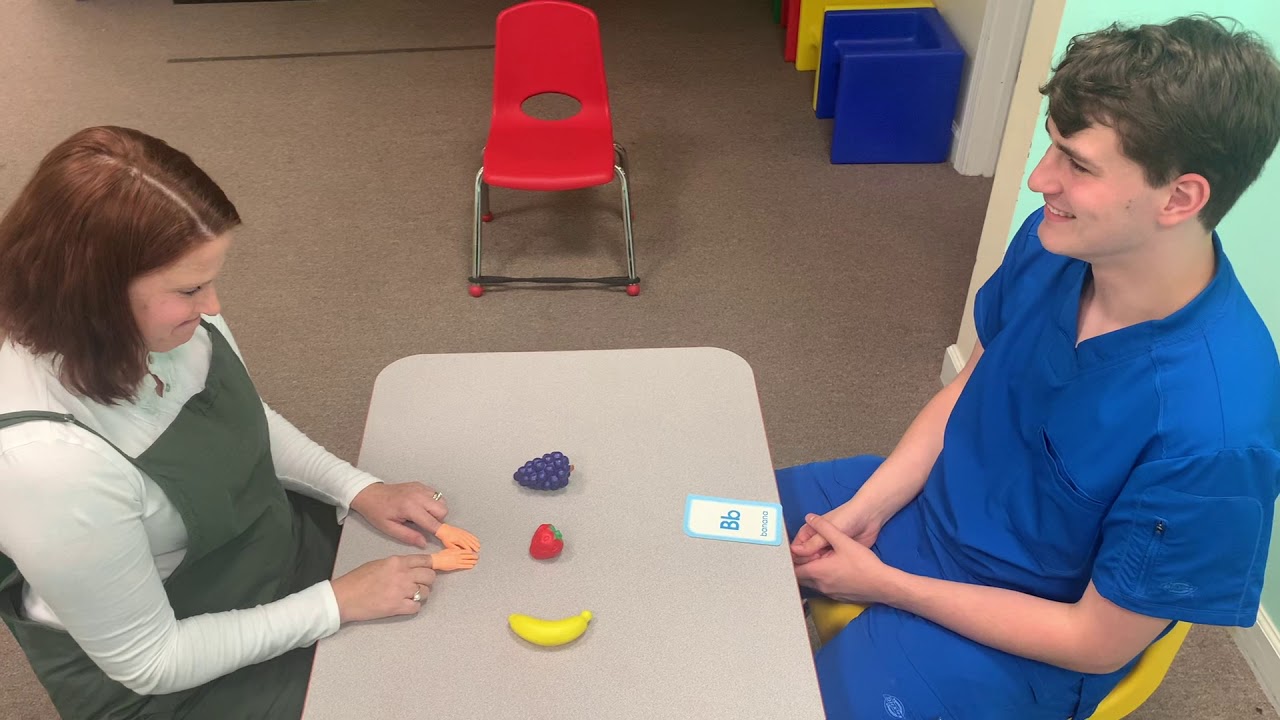
The hierarchy matters because too much support too often creates prompt dependency, where a child can only perform a skill when someone provides a specific cue. Too little support, on the other hand, leads to errors, frustration, and avoidance. A well-applied hierarchy keeps a child in what behavior analysts call the zone of successful learning.
The Two Main Approaches: Most-to-Least and Least-to-Most
There are two primary directions a therapist can move through the hierarchy, and each has a clear purpose.
Most-to-Least Prompting
In most-to-least prompting, the therapist starts with the highest level of support the learner needs to succeed, then gradually reduces it across trials. This approach is often used when teaching a brand-new skill, especially one that is complex or where errors carry a real cost (such as safety skills).
For example, when teaching a young child to wash their hands, a therapist might begin with full hand-over-hand guidance. Once the child performs the steps consistently with that support, the therapist reduces to a light touch at the wrist, then to a model, then to a verbal reminder, and finally to no prompt at all.
This approach is errorless by design. It builds confidence early and avoids the frustration of repeated failure.
Least-to-Most Prompting
In least-to-most prompting, the therapist starts with the lowest level of support and only increases it if the learner does not respond correctly within a few seconds. This is often used when a skill is already partially acquired, or when the team wants to assess what the learner can do on their own.
For instance, if a child has been working on requesting a snack, the therapist may first wait expectantly (no prompt), then offer a gestural cue, then model the word, and only physically guide the child if needed. Each step gives the child a chance to demonstrate independence first.
This approach builds problem-solving and reduces over-prompting, but it does carry a higher risk of errors during the trial.
The Common Types of Prompts, From Most to Least Intrusive
Most ABA programs organize prompts along a hierarchy that looks roughly like this, with the most intrusive (most supportive) at the top.
Full Physical Prompts
The therapist physically guides the learner through the entire response, such as hand-over-hand assistance to stack blocks or sign a word. This is the most supportive prompt and is usually reserved for new or motor-heavy skills.
Partial Physical Prompts
The therapist provides a light touch, a nudge at the elbow, or a guiding tap, just enough to initiate the movement without completing it for the learner.
Modeling Prompts
The therapist demonstrates the response, and the learner imitates. Modeling can be done in full or in part, and it works well for children who are strong imitators.
Gestural Prompts
A point, a glance, or a hand motion directs the learner’s attention toward the correct response without showing them how to perform it.
Verbal Prompts
These range from a full verbal model (“say cookie”) to a partial phonemic cue (“co…”) to a more open prompt (“what do you want?”). Verbal prompts are common but can be harder to fade than people expect, which is why many therapists use them carefully.
Visual Prompts
Pictures, written words, schedules, or video models that cue the response. Visual supports often remain in place longer than other prompts because they function more like permanent tools for independence than transient cues.
Positional Prompts
Arranging materials so the correct answer is closer, more visible, or easier to reach. For example, placing the correct picture card slightly nearer the learner during a matching task.
Independent Response
No prompt is delivered. The learner performs the skill on their own. This is always the end goal.
Prompt Fading: Why It Matters More Than the Prompt Itself
Prompts are only valuable if they are eventually removed. Prompt fading is the gradual reduction of support so the learner performs the skill independently under natural conditions.
In our sessions, we’ve seen that fading is where most prompt-dependency issues actually originate. A prompt that worked beautifully on day one can become a crutch by week three if it is not faded on a clear schedule. Fading should be planned the moment the prompt is introduced, not as an afterthought.
Common fading strategies include:
- Time delay, where the therapist waits progressively longer before delivering the prompt, giving the learner more opportunity to respond independently.
- Graduated guidance, where physical prompts are reduced in pressure and location (full hand, then wrist, then elbow, then shadow).
- Stimulus fading, where a visual or positional cue is gradually made less obvious, such as fading the boldness of a written letter that the child is tracing.
A useful rule of thumb our BCBAs follow: if the same prompt level has been used for three sessions in a row without movement, the fading plan needs to be revisited.
How Prompt Hierarchy Looks in Real ABA Sessions
The hierarchy is not an academic concept. It shapes nearly every interaction during a session.
In our in-home ABA sessions, we frequently teach functional skills like getting dressed, brushing teeth, or responding to one’s name. A typical morning routine program might start with full physical prompting for putting on a shirt, then move to partial physical, then to a modeled demonstration over the course of two to three weeks, depending on the learner’s pace.
In our daycare-based ABA work, the hierarchy is often adjusted for the social environment. A child learning to request a turn at the sensory table may start with a gestural prompt from the therapist standing nearby, fade to an expectant look, and eventually transfer the skill so the child requests directly from a peer without any adult cue.
In early intervention ABA for toddlers, prompts skew toward modeling, gestural, and naturalistic cues embedded in play. We’ve found that overly verbal prompts at this stage often slow language development rather than support it, because the child learns to wait for the adult’s words instead of producing their own.
Parent training is where the hierarchy becomes a household tool. When a caregiver understands that a verbal reminder is more intrusive than a gestural one, they can deliver the right level of help during everyday routines, and they can recognize when their child is ready for less.
Common Mistakes to Avoid
A few patterns come up often, both in clinical work and in homes new to ABA.
The first is unintentional prompt layering, where a parent or therapist delivers a verbal instruction, a point, and a physical guide all at once. The learner has no way to know which cue actually triggered the response, and fading becomes nearly impossible. Deliver one prompt at a time.
The second is reinforcing prompted responses the same way as independent ones. If a child gets the same enthusiastic reaction whether they responded on their own or after a full physical guide, there is no incentive to move toward independence. Differential reinforcement, where independent responses earn a stronger reinforcer, is what drives the fading process forward.
The third is treating verbal prompts as the safe default. Verbal cues feel natural to adults, but they are often the hardest to fade and the easiest to over-rely on. A well-placed gesture or visual support frequently outperforms a verbal reminder.
How Educators and School Personnel Can Use Prompt Hierarchy
Teachers, paraprofessionals, and aides can apply the same hierarchy in classroom routines, transitions, and academic tasks. A student learning to line up for recess, for example, may need a partial physical prompt at first, then a gesture toward the door, then only the verbal instruction given to the whole class.
When school teams and ABA providers share a common prompt hierarchy and fading plan, skills generalize faster across settings. This is one of the reasons our BCBAs often coordinate directly with school staff when a learner is enrolled in both school and home-based services.
Conclusion
Prompt hierarchy is one of the most practical concepts in ABA therapy. It explains how new skills are built, why progress sometimes looks slow on the surface but is moving steadily underneath, and how therapists, parents, and educators can deliver help that actually leads to independence rather than dependence.
The key takeaways are simple. Match the prompt to what the learner needs in the moment, not what feels natural to the adult. Plan the fading schedule the day the prompt is introduced. Reinforce independent responses more strongly than prompted ones. And keep the language of prompts consistent across everyone involved in the child’s day.
When these pieces come together, prompt hierarchy stops being a clinical framework and starts being a quiet engine of progress.
Work With Admire ABA
Admire ABA provides individualized ABA therapy across Maryland, with a strong focus on family collaboration and skill generalization. If you’d like to learn how our team uses prompt hierarchy in everyday sessions, we’re currently serving families in Ellicot City, Severn, and Glen Burnie, among other communities across the state.
We offer in-home ABA therapy, parent training, daycare-based ABA, weekend ABA, early intervention, and diagnostic services. To talk with our team about whether our programs are a fit for your child, contact us through the form on our website or call our office at 443-702-5206 to schedule a consultation.
Frequently Asked Questions
What is the difference between a prompt and a cue in ABA therapy?
In ABA, a prompt is a temporary form of help added by the therapist to evoke a correct response, with the intention of fading it out. A cue, more broadly, can refer to any signal in the environment that occasions a behavior, including natural cues that should remain in place permanently (such as a ringing phone signaling to answer it). Prompts are designed to disappear. Cues often are not.
How long does it take to fade a prompt in ABA therapy?
There is no fixed timeline. Fading depends on the skill, the learner, the prompt level, and how consistently the program is run across environments. Some prompts fade in a few sessions; others take weeks. A good BCBA monitors data closely and adjusts the fading schedule based on independent response rates, not a calendar.
Can parents use prompt hierarchy at home without formal ABA training?
Yes, at least at a basic level. Parents who learn the hierarchy through parent training can deliver appropriate prompts during daily routines like meals, dressing, and bedtime. The most important habits are using one prompt at a time, starting with the least intrusive level that will likely lead to success, and giving stronger praise for independent responses than for prompted ones.
SOURCES:
- https://www.pearson.com/
- https://www.abainternational.org/
- https://www.bacb.com/
- https://autismpdc.fpg.unc.edu/
- https://www.autismspeaks.org/applied-behavior-analysis
- https://www.cdc.gov/ncbddd/autism/treatment.html
- https://www.nichd.nih.gov/health/topics/autism
- https://health.maryland.gov/