Written By:

MS, BCBA
Introduction
When a child starts ABA therapy, families often expect the work to happen between the child and the therapist. That work matters, but it is only part of the picture. Children spend far more hours each week with their parents and caregivers than with any clinician. What happens during dinner, bath time, the morning rush, and the grocery store trip shapes a child’s progress just as much as what happens in a structured session.
That is exactly where ABA parent training comes in. It is the part of an ABA program designed to put effective, evidence-based strategies directly into the hands of the people who know the child best. For many Maryland families, it turns out to be one of the most valuable parts of the entire process.
This guide explains what ABA parent training is, what it actually involves, and why it matters so much for lasting progress.
What Is ABA Parent Training?
ABA parent training is a structured, collaborative process in which a Board Certified Behavior Analyst (BCBA) or a supervised therapist teaches parents and caregivers how to use applied behavior analysis strategies in everyday life. Rather than learning theory for its own sake, families learn practical, repeatable techniques they can use to encourage communication, build daily living skills, and respond to challenging behavior in a consistent, supportive way.
The goal is not to turn parents into therapists. The goal is to help parents become confident, skilled advocates and teachers for their own child, using methods that are grounded in research and tailored to the family’s real routines and priorities.
A good parent training program is individualized. A BCBA looks at the child’s goals, the family’s daily life, and the moments that feel hardest, then builds a plan around those specifics. Training might focus on encouraging a child to request items instead of grabbing, building a calmer bedtime routine, expanding food choices, or reducing meltdowns during transitions.
Parent Training Is Not the Same as Sitting In on Sessions
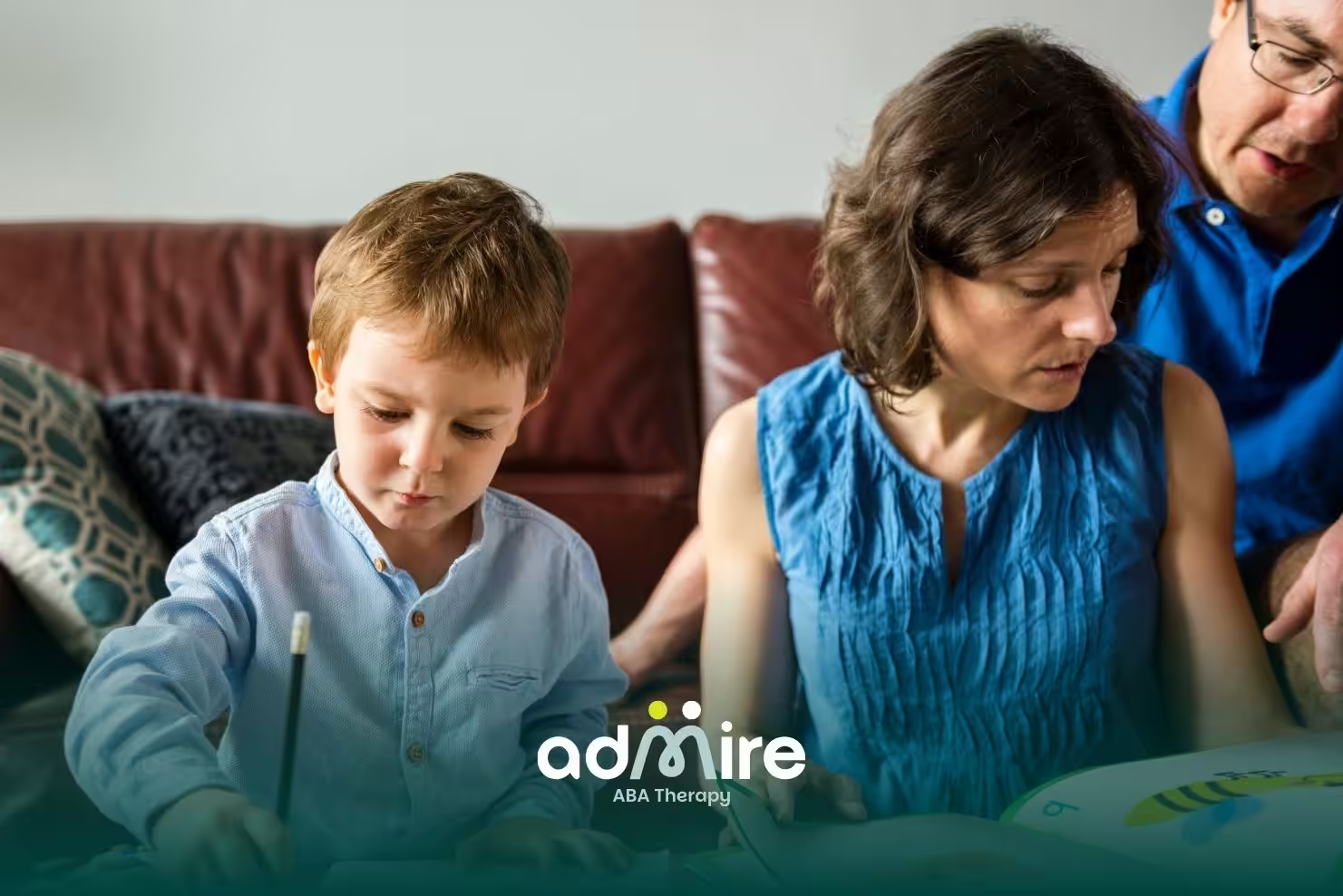
People sometimes confuse parent training with simply being present during therapy. Watching a session can be helpful, but observation alone is not training. Parent training is active. It involves a clinician teaching specific skills, modeling them, watching the parent practice, and giving feedback so the parent can carry those skills into moments when no therapist is in the room.
In our experience, this distinction changes everything. A parent who has only watched a session often feels unsure the moment a behavior happens at home. A parent who has been coached through it, practiced it, and received feedback tends to respond with far more confidence.
Why ABA Parent Training Matters
It is fair to ask why families should invest time in training when therapists are already working with the child. The answer comes down to how learning actually works for autistic children, and how progress is maintained over the long term.
It Helps Skills Generalize Beyond Therapy
One of the biggest challenges in any therapy is generalization, which means using a skill in new places, with new people, and in new situations. A child might learn to ask for a snack during a session but not know to do the same thing at home or at a grandparent’s house.
When parents are trained to prompt and reinforce the same skills, the child gets many more opportunities to practice across natural settings. Skills stop being something that only happens during therapy and start becoming part of daily life.
It Creates Consistency Across People and Settings
Children thrive on consistency. When a therapist responds to a behavior one way and a parent responds a completely different way, it can confuse the child and slow progress. Worse, behaviors that are unintentionally reinforced at home can undo the gains made in session.
Parent training closes that gap. Everyone who supports the child can use the same language, the same prompts, and the same responses, which makes expectations clear and learning much faster.
It Protects Progress Over Time
ABA therapy is not meant to last forever. The aim is meaningful, durable progress that holds up after services taper off. Skills that are only maintained by a therapist tend to fade once therapy ends. Skills that the whole family knows how to support tend to last. Strong parent involvement is one of the most important factors in helping progress stick.
It Reduces Family Stress and Builds Confidence
Raising an autistic child can be demanding, and many parents tell us they feel exhausted and unsure during the hardest moments. Training gives families a plan. When a parent understands why a behavior is happening and has a clear strategy to respond, those moments feel less overwhelming.
We have worked with parents who arrived feeling defeated by daily meltdowns and, after a few weeks of coaching, described feeling like they finally had tools that worked. That shift in confidence often improves the entire household, not just the child’s behavior.
What ABA Parent Training Actually Covers
Parent training is highly individualized, but most programs share a common foundation. Here are the core areas families typically learn.
Understanding the Core Principles of ABA
Before practicing strategies, parents benefit from understanding the basic logic behind them. This includes how behavior is influenced by what happens right before it and right after it, and why some behaviors continue while others fade. When parents understand the reasoning, the strategies make far more sense and are easier to apply consistently.
https://www.youtube.com/watch?v=HbbriSjuC5I
Reinforcement and Prompting Strategies
Much of ABA centers on encouraging helpful behaviors through reinforcement and supporting new skills through prompting. Parents learn how to recognize and reward the behaviors they want to see more of, how to prompt a skill without creating dependence on prompts, and how to gradually step back so the child can succeed independently.
Managing Challenging Behavior
Challenging behaviors usually serve a purpose. A child may be trying to communicate a need, escape a difficult task, or gain attention. Parents learn how to identify what a behavior is communicating and how to respond in ways that meet the underlying need while teaching a more effective replacement skill. This is often the area families are most eager to address.
Collecting and Using Simple Data
Parents are not expected to run complex assessments, but learning to track a few key things, such as how often a behavior happens or whether a new skill is improving, helps families and clinicians see what is working. Simple data takes the guesswork out of decisions and reveals progress that can otherwise be hard to notice day to day.
How ABA Parent Training Works in Practice
Parent training usually happens through regular sessions with a BCBA or supervised therapist, either in the home or through a mix of in-person and virtual meetings. Sessions tend to be hands-on rather than lecture style. A clinician might model a strategy, ask the parent to try it, and then offer feedback in real time.
A Look at a Typical Parent Training Plan
In our sessions, a parent training plan often starts with one or two priorities that matter most to the family, rather than trying to change everything at once. For example, one family we worked with was struggling with difficult transitions between activities, which led to long meltdowns several times a day.
We began by helping the parents understand what was triggering the transitions and what the behavior was communicating. Then we coached them through using clear warnings before a change, a simple visual schedule, and consistent reinforcement when their child transitioned calmly. Over several weeks, the parents practiced these steps with our guidance until they felt natural. The meltdowns did not vanish overnight, but they became shorter and less frequent, and the parents told us they no longer dreaded transitions the way they once had.
That pattern, choosing a focus, learning the strategy, practicing with feedback, and reviewing the data, repeats as the family builds a larger toolkit over time.
How Parent Training Fits Into a Full ABA Program
Parent training rarely stands alone. It works best as one part of a coordinated program. In an in-home ABA model, for instance, a child works directly with a therapist while parents are coached to extend those same strategies into family routines. In early intervention, where young children are learning foundational communication and play skills, parent involvement is especially powerful because so much early learning happens through everyday interaction.
The same is true across other service models. Whether a child receives weekend support, daycare-based services, or early intervention, trained parents multiply the value of every therapy hour by reinforcing skills in between. Families who are unsure where to begin often start with a diagnostic evaluation, which clarifies a child’s needs and helps the team design a plan that includes the right level of parent involvement.
How to Get the Most Out of Parent Training
Families tend to see the strongest results when they treat parent training as a true partnership. A few things help. Be honest with your clinician about what your days actually look like, including the parts that feel messy, because strategies only work when they fit real life. Practice between sessions, even imperfectly, since repetition is what builds skill. Ask questions whenever something is unclear, and share what is and is not working so the plan can be adjusted. Progress is rarely a straight line, and steady effort matters more than perfection.
Conclusion
ABA parent training is far more than watching therapy happen. It is a structured, evidence-based process that equips parents and caregivers with the skills to support their autistic child every single day. By helping skills generalize beyond sessions, creating consistency across people and settings, protecting progress over the long term, and reducing family stress, parent training often becomes one of the most meaningful parts of an ABA program. When parents are confident and well supported, children gain a team that surrounds them with the same understanding and the same effective strategies, at therapy and at home.
Partner With Admire ABA on Your Family’s Goals
At Admire ABA, parent training is a core part of how we help Maryland families create lasting progress. Our team works alongside parents and caregivers in Towson, Ellicott City, and North Bethesda to turn proven ABA strategies into everyday tools you can use with confidence.
If you want to learn how parent training and our other services can support your child, contact us today to start the conversation. We would be glad to answer your questions and help you take the next step.
Frequently Asked Questions About ABA Parent Training
What is the goal of parent training in ABA?
The goal of ABA parent training is to teach parents and caregivers how to use evidence-based ABA strategies in everyday routines so a child’s skills carry over beyond therapy and progress lasts over time. It helps families respond to behavior consistently, encourage communication, and build daily living skills with greater confidence.
How long does ABA parent training take?
There is no fixed timeline. Parent training is ongoing and tailored to each family’s goals. Many families meet with their BCBA regularly throughout the child’s program, focusing on one or two priorities at a time and adding new skills as they progress. The pace depends on the child’s needs and the family’s goals.
Do I need experience with ABA to take part in parent training?
No. Parent training is designed for families with no background in ABA. A BCBA or supervised therapist explains each strategy in plain language, models it, and coaches you through practice with feedback, so you learn step by step at a comfortable pace.
SOURCES:
- https://www.cdc.gov/autism/index.html
- https://www.nichd.nih.gov/health/topics/autism
- https://www.bacb.com
- https://www.abainternational.org
- https://www.healthychildren.org
- https://autismsciencefoundation.org
- https://pubmed.ncbi.nlm.nih.gov