

Introduction
If you’ve sat in on an ABA therapy session, you’ve probably noticed your child’s therapist jotting notes, tapping on a tablet, or marking a clipboard throughout the visit. To a parent who’s new to ABA, this can look mysterious, or even a little clinical, especially when your child is in the middle of building a block tower or working through a tough moment. What is all that writing for? And does it actually help your child?
The short answer is yes. Data collection isn’t paperwork for paperwork’s sake. It’s the backbone of effective ABA therapy. Without it, therapists would be guessing at what’s working and what isn’t. With it, every decision about your child’s program, from which skills to target next to when a strategy needs to change, is grounded in real evidence rather than a hunch.
This guide walks through what ABA data collection actually looks like, why it matters, and how it directly shapes the therapy your child receives. Whether you’re a parent trying to understand your child’s session notes, an autistic individual curious about how your own program is measured, or an educator coordinating with a therapy team, this article will demystify the process from the ground up.
What Is ABA Data Collection?
ABA data collection is the ongoing practice of recording specific, observable information about a child’s behavior and skill development during therapy. Every time a therapist prompts a skill, reinforces a behavior, or notes how a child responded to a particular situation, that moment becomes a data point.
This isn’t vague impression-gathering. Applied behavior analysis is built on the idea that behavior can be objectively measured, which means therapists are trained to record what actually happened, not what they assume happened. A therapist doesn’t write “had a good session” in a data sheet. Instead, they might record the number of independent responses to a specific request, the duration of a transition between activities, or how many opportunities it took before a skill was demonstrated without a prompt.
Why Objective Measurement Matters
Subjective impressions can be useful in conversation, but they aren’t reliable enough to guide a therapy plan. Two therapists might disagree on whether a session went “well.” They’re far less likely to disagree on whether a child completed 8 out of 10 trials independently. That precision is what allows an ABA program to be adjusted with confidence rather than guesswork.
In our sessions at Admire ABA, we’ve found that data doesn’t just protect the integrity of the program. It also gives parents something concrete to hold onto. Instead of hearing “we’re working on communication,” a parent can see the actual trend: how often their child is initiating requests now compared to a few weeks ago.
Common Types of Data Collected in ABA Therapy
Not all behaviors are measured the same way. A skilled therapist chooses the data collection method that fits the behavior being targeted, since the wrong method can either overstate or understate real progress.
Frequency and Rate Data
Frequency data simply counts how often a behavior occurs. This works well for behaviors with a clear beginning and end, such as the number of times a child asks for a toy using words, or how many times a disruptive behavior occurs in a session. When sessions vary in length, therapists often convert frequency into a rate (behaviors per minute or per hour) so comparisons stay accurate over time.
Duration Data
Duration data tracks how long a behavior lasts. This is especially useful for behaviors like tantrums, engagement in an activity, or time spent independently completing a task. A reduction in tantrum duration, even before frequency changes, is often one of the first signs that a behavior plan is working.
Latency Data
Latency measures the time between an instruction and the start of a response. For a child who takes several minutes to begin a task after being asked, tracking latency helps the team see whether transitions and task initiation are improving, even if the task itself hasn’t changed.
ABC Data (Antecedent-Behavior-Consequence)
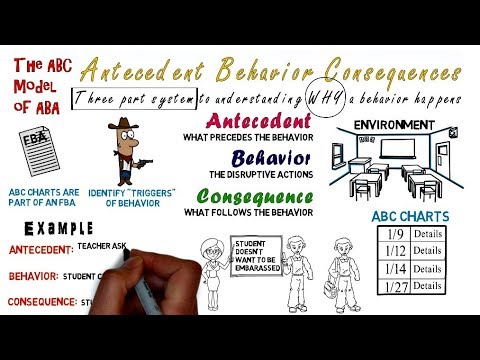
ABC data is one of the most important tools in ABA. It captures what happened right before a behavior (the antecedent), the behavior itself, and what happened immediately after (the consequence). This structure helps a Board Certified Behavior Analyst identify patterns, such as a behavior that consistently occurs during loud environments or right before a preferred activity ends. Understanding these patterns is often what allows a team to build an effective, individualized support plan rather than a generic one.
Percentage of Correct Responses
For skill acquisition goals, therapists frequently track the percentage of trials completed correctly out of the total number attempted. This is one of the clearest ways to show measurable growth, since it directly reflects whether a skill is becoming more consistent over time.
How Data Collection Happens During a Session
Data collection looks different depending on the setting and the service being provided, but the core process stays consistent.
Real-Time Recording
Most ABA data is collected in the moment, not reconstructed afterward. Therapists use structured data sheets, tablets, or specialized software to mark responses as they happen. This immediacy matters because memory is unreliable. Recording in real time keeps the data accurate and prevents therapists from unintentionally rounding a session up or down based on how it felt.
Trial-Based Data Collection
For discrete skill-building goals, such as learning to identify colors or answer personal questions, therapists often use trial-based recording. Each attempt, or “trial,” is marked as correct, incorrect, or prompted. Over dozens of trials across sessions, this builds a clear picture of skill mastery.
Continuous and Momentary Time Sampling
For behaviors that are harder to isolate into discrete trials, like engagement or on-task behavior, therapists may use time sampling. This means checking in at set intervals (say, every 30 seconds) and recording whether the target behavior is occurring at that moment. It’s a practical way to estimate patterns in ongoing behaviors without needing to track every single second.
Data Collection Across Different Service Types
Data collection isn’t limited to a therapy room. In-home ABA therapy sessions capture how skills generalize to a child’s natural environment, including routines like mealtime or transitions to homework. Daycare-based ABA and weekend ABA sessions track how a child performs in group settings and less structured schedules. During parent training, therapists also collect data on caregiver implementation, noting how consistently strategies are being used outside of formal sessions, since a plan only works if it’s followed at home too. Early intervention ABA therapy relies heavily on frequent, sensitive measurement, since developmental changes can happen quickly in young children and treatment plans often need fast adjustment.
How Therapists Use Data to Guide Treatment Decisions
Collecting data is only half the process. What happens next is where the real value shows up.
Graphing Progress Over Time
Raw numbers on a data sheet are hard to interpret at a glance, which is why ABA relies heavily on graphing. A Board Certified Behavior Analyst reviews graphs regularly to look for trends: is a skill improving steadily, plateauing, or moving in the wrong direction? Visual trends often reveal patterns that would be easy to miss in a single session.
Identifying When a Strategy Needs to Change
One of the most important functions of data is telling the team when something isn’t working. If a graph shows no meaningful progress after a reasonable number of sessions, that’s a signal to reevaluate the approach, not push forward with the same plan indefinitely. We’ve seen cases where a single data trend prompted a full revision of a behavior intervention plan, leading to much faster progress once the right approach was identified.
Setting and Adjusting Goals
As a child masters a skill, data shows exactly when it’s time to introduce the next target. This keeps therapy appropriately challenging. Moving too quickly can set a child up to struggle unnecessarily; moving too slowly can mean missed opportunities for growth. Data removes the guesswork from that timing.
Supporting Insurance and Diagnostic Documentation
Accurate data collection also supports the broader diagnostic and treatment planning process, including documentation often required for insurance authorization and treatment plan reviews. Reliable records demonstrate medical necessity and ongoing progress, which helps families avoid interruptions in care.
What Data Collection Looks Like From a Parent’s Perspective
Parents don’t need to become behavior analysts to benefit from understanding this process. Here’s what to expect and how to make the most of it.
Reviewing Progress Reports
Most ABA providers share periodic progress summaries or graphs with families. These reports translate the raw data into a readable picture: which skills have improved, which behaviors have decreased, and where the current focus lies. Asking your child’s team to walk you through a graph, even briefly, can make these updates far more meaningful than a written summary alone.
Asking Informed Questions
Understanding the basics of data collection gives parents better questions to ask, such as “How is this behavior being measured?” or “What would we expect to see if this strategy is working?” These questions invite a more collaborative relationship with the therapy team.
Recognizing That Data Reflects the Whole Child
It’s worth remembering that data collection in ABA is meant to track meaningful, individualized goals, not to reduce a child to a set of numbers. Every autistic child’s program should reflect their specific strengths, needs, and preferences. Data is a tool for understanding progress toward goals that matter to the family, not a measure of a child’s worth or a checklist to “fix” who they are.
Conclusion
Data collection is what separates effective ABA therapy from guesswork. Every mark on a data sheet, every graph reviewed by a Board Certified Behavior Analyst, and every adjustment to a treatment plan traces back to real, observed information about how a child is progressing. For parents, understanding this process can turn therapy from something that feels opaque into something you can actively engage with and ask informed questions about. At the end of the day, the goal of all that measurement is simple: making sure your child’s program is genuinely working for them.
If you have questions about how data collection works in your child’s ABA program, or you’re exploring services like in-home ABA therapy, parent training, or early intervention ABA therapy, our team is happy to walk you through the process. At Admire ABA, we proudly serve families in Dundalk, Columbia, and Potomac, along with surrounding Maryland communities.
Contact us today to schedule a consultation and learn more about how our data-driven approach can support your child’s growth.
Frequently Asked Questions
How often is ABA data collected?
Data is typically collected during every session, since consistent measurement is what allows a therapy team to track meaningful trends over time rather than relying on isolated observations.
Is ABA data collection the same for every child?
No. The specific data collection method depends on the goals in a child’s individualized treatment plan. A behavior analyst selects the approach (frequency, duration, ABC data, and so on) that best fits each targeted skill or behavior.
Can parents see their child’s ABA data?
Yes. Reputable ABA providers regularly share progress reports and graphs with families and are typically glad to walk parents through what the data shows and how it’s shaping the treatment plan.
SOURCES:
- https://www.bacb.com/
- https://www.abainternational.org/
- https://www.nimh.nih.gov/health/topics/autism-spectrum-disorders-asd
- https://www.cdc.gov/autism/data-research/
- https://www.aap.org/
- https://www.autismspeaks.org/applied-behavior-analysis
- https://health.maryland.gov/