Introduction
If your child repeats lines from a favorite show, echoes the last word of your question back to you, or answers “Do you want a snack?” with “Do you want a snack?” instead of yes or no, you may have already heard the term echolalia. For a long time, this kind of repeated speech was treated as something to eliminate. Today, most speech-language pathologists and behavior analysts understand it differently: echolalia is usually a child’s best available tool for communicating, connecting, and processing language, not a behavior to be punished out of existence.
This guide walks through what echolalia actually is, why it shows up so often in autistic children, and what parents, therapists, and educators can do to respond in ways that build language rather than simply suppress it.
What Is Echolalia in Autism?
Echolalia is the repetition of words, phrases, or sounds a child has heard before, whether from a parent, a teacher, a video, or a book. It is one of the most common language patterns seen in autistic children who use spoken language, and research places it in a large majority of verbal autistic individuals rather than a small subset.
It helps to think of echolalia less as one single behavior and more as a family of related patterns that can serve very different purposes depending on the child and the moment.
Immediate vs. Delayed Echolalia
Immediate echolalia happens right after hearing the words, such as a child repeating “time for bed” the instant a parent says it. Delayed echolalia happens after a gap of minutes, hours, or even days or weeks, such as a child reciting a full line from a movie scene during an unrelated moment at the dinner table. Both forms can be exact repetitions or “mitigated,” meaning the child modifies the wording slightly to fit the new situation.
Echolalia and Gestalt Language Processing
Many autistic children acquire language in chunks, called “gestalts,” rather than building sentences word by word the way analytic language learners typically do. A child might learn “let’s go this way” as one inseparable unit long before they understand what each individual word means on its own. Echolalia is often the first visible stage of this gestalt language development. Over time, with the right support, many children learn to break these chunks into smaller pieces and eventually combine them into original, self-generated language.
Why Echolalia Happens in Autistic Children
There is rarely one single reason a child echoes. In practice, the same child may use repeated speech for several different purposes across a single day, including:
- Requesting. Repeating a phrase that was previously paired with getting something they want, such as saying “want a cookie” because that is the exact phrase that has worked before.
- Processing time. Buying a few extra seconds to understand a question or instruction before formulating a response.
- Self-regulation. Using familiar, predictable sounds or phrases to stay calm during overwhelming or unfamiliar moments.
- Affirming or protesting. Echoing part of a question as a way of saying yes, or repeating a demand back as a way of expressing “no” or “I don’t want to.”
- Social connection. Repeating a favorite line from a show because it was associated with laughter, closeness, or a shared moment with a caregiver.
- Practicing language. Rehearsing sounds and sentence patterns as part of ordinary language development, similar to how younger children babble and repeat before they speak in full sentences.
The common thread across nearly all of these functions is that echolalia is communication, even when the words themselves do not seem to match the situation at first glance.
Is Echolalia Always a Sign of Autism?
Not necessarily. Very young toddlers who are typically developing often go through a brief phase of echoing words and phrases as part of normal language acquisition, and echolalia can also appear alongside other conditions affecting speech and language. What tends to distinguish autism-related echolalia is how long it persists, how much of a child’s total communication it makes up, and whether it appears alongside other early signs of autism, such as differences in eye contact, social reciprocity, or restricted and repetitive behaviors. A comprehensive developmental evaluation, rather than the presence of echolalia alone, is what leads to an accurate diagnosis.
How to Respond to Echolalia: Practical Strategies for Families
The goal of a thoughtful response is rarely to stop a child from echoing altogether. Instead, the aim is to understand what the repetition is doing for the child and to build on it, so that language keeps growing rather than staying stuck in one place.
Listen for the Function First
Before responding, it helps to pause and ask what this repetition might mean right now. Is the child asking for something? Trying to escape a demand? Filling silence while they process a question? The same phrase can mean different things in different contexts, so watching what happens right before and right after the echo often reveals the purpose.
Model Functional Language
Once you have a guess at the function, model the words you want the child to eventually use instead of, or alongside, the echoed phrase. If a child echoes “do you want juice” to request juice, a parent or therapist might respond by modeling “I want juice” and then providing the juice once the child attempts or approximates the modeled phrase. Over many repetitions, this kind of modeling helps shift echoed language toward original, self-generated language.
Use Visual Supports and AAC When Helpful
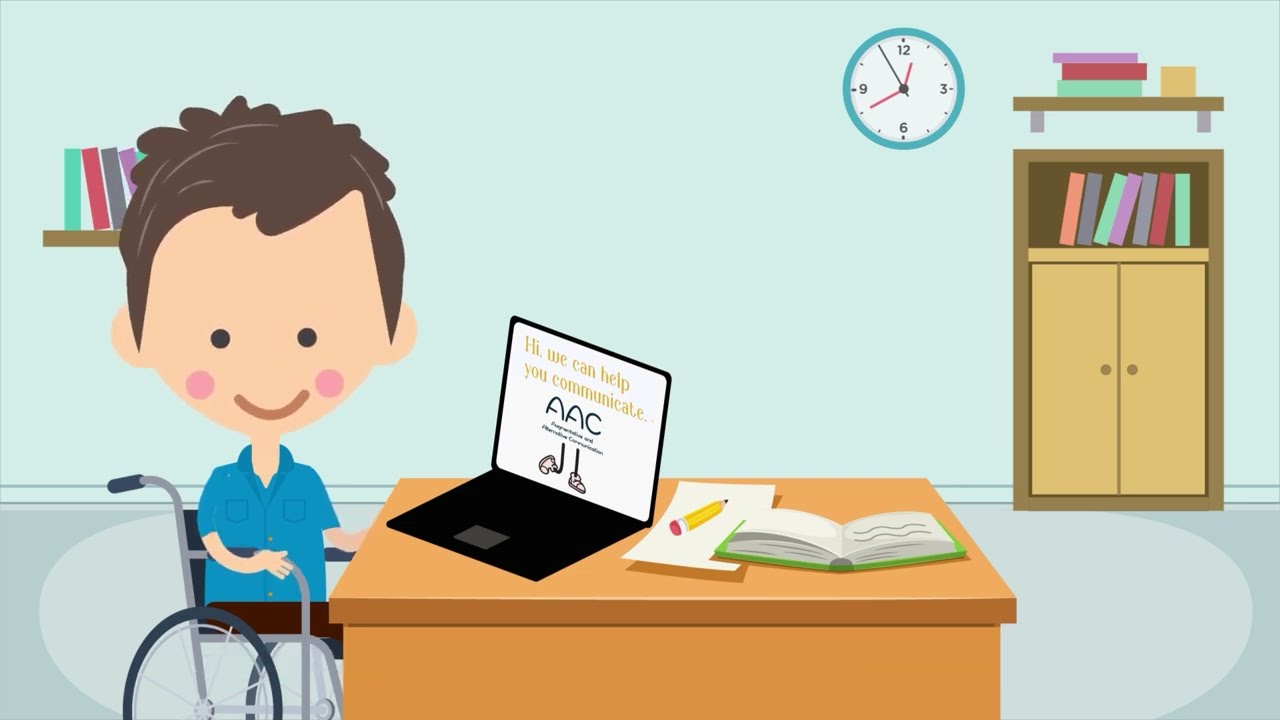
For children who are minimally speaking or who echo far more than they generate original speech, visual supports and augmentative and alternative communication (AAC) tools can reduce frustration and give them another reliable way to express wants, needs, and feelings while spoken language continues to develop. AAC does not replace speech or discourage it. Current research generally shows the opposite: giving a child another communication pathway tends to support spoken language rather than compete with it.
When to Involve a Speech-Language Pathologist or BCBA
Echolalia sits right at the intersection of speech-language pathology and behavior analysis, so families often get the most complete support when both disciplines are involved. A speech-language pathologist can assess where a child falls on the gestalt language development continuum and guide the shift from scripted phrases to flexible language. A Board Certified Behavior Analyst can run a functional assessment to identify what specific echoed phrases are accomplishing for the child across settings, then build that understanding directly into the child’s therapy goals.
What Our ABA Sessions Have Taught Us About Echolalia
In our sessions, one of the most common questions parents ask early on is whether they should be correcting their child every time they echo. We generally start by watching before we intervene. In one case, a young child in our program answered nearly every question with a repeated version of that same question. Rather than treating this as noncompliance, our team tracked what happened around each instance and found the child was consistently using the repetition to buy processing time before responding. Once we built in a short visual pause cue and modeled a simple response option, the child began replacing many of those echoes with short, functional answers within a few months. That shift did not happen because we tried to eliminate the echoing. It happened because we figured out what the echoing was doing for the child first.
Common Mistakes to Avoid When Responding to Echolalia
- Treating every echo as meaningless. Dismissing repeated speech as “just noise” can cause caregivers and educators to miss genuine requests, protests, or attempts to connect.
- Trying to eliminate echolalia outright. Suppressing repeated speech without giving the child another way to communicate can increase frustration and reduce a child’s overall communication, not improve it.
- Ignoring the pattern across settings. A phrase that seems random at home may make perfect sense once you see what triggers it at school or during therapy, so tracking context matters.
- Waiting too long to seek support. Persistent echolalia that is not shifting toward more flexible language over time is worth discussing with a speech-language pathologist or BCBA sooner rather than later.
Conclusion
Echolalia is one of the most recognizable features of autistic language development, and it is far more often a bridge toward communication than a behavior standing in its way. Whether a child is repeating an immediate question, reciting a favorite line hours later, or working through a full gestalt phrase, that repetition usually carries a purpose worth understanding. With patient observation, thoughtful modeling, and the right combination of speech-language and behavior-analytic support, many children move from echoed language toward original, flexible communication over time.
Get Support for Your Child’s Communication Journey
Every child’s communication style is unique, and echolalia often responds well to consistent, individualized support at home, at school, and in therapy. Admire ABA works with families across Maryland, including in Baltimore, Gaithersburg in Montgomery County, and Severn in Anne Arundel County, offering in-home ABA therapy, parent training, daycare-based ABA, weekend ABA, early intervention services, and diagnostic evaluations tailored to each child’s communication goals.
Contact us today to talk with our team about how individualized ABA support can help your child build functional, flexible communication.
Frequently Asked Questions
Is echolalia a sign that my child will never speak in original sentences?
No. Echolalia is often an early stage of language development rather than a permanent ceiling. With consistent modeling and support from a speech-language pathologist or ABA team, many children gradually shift from repeated phrases toward original, self-generated language.
Should I stop my child every time they repeat something?
Generally, no. Interrupting every echo without addressing the underlying communicative purpose can increase frustration. It is usually more effective to identify what the repetition is accomplishing for the child and respond to that need directly.
What is the difference between echolalia and stimming?
Echolalia specifically involves repeating previously heard words or phrases and often carries a communicative function, while stimming refers to a broader range of repetitive movements or sounds, such as hand-flapping or humming, that primarily serve self-regulation. The two can overlap, but they are not the same thing.
SOURCES:
- https://www.asha.org/practice-portal/clinical-topics/autism/
- https://pmc.ncbi.nlm.nih.gov/articles/PMC9620688/
- https://pmc.ncbi.nlm.nih.gov/articles/PMC9884957/
- https://pmc.ncbi.nlm.nih.gov/articles/PMC8586315/
- https://www.ncbi.nlm.nih.gov/pmc/articles/PMC8301866/
- https://www.webmd.com/parenting/what-is-echolalia