

Introduction
If your child has recently been identified as autistic, or you are still waiting on an evaluation, you have probably come across the term ABA therapy more than once. It shows up in pediatrician conversations, insurance paperwork, parent forums, and school meetings, often without anyone stopping to explain what it actually is. This ABA therapy guide for parents is meant to fill that gap. Here in Maryland, families ask us the same core questions every week, and this article pulls those answers into one place so you can make informed decisions without piecing it together from a dozen tabs.
Our goal is simple. By the end of this guide, you should understand what ABA therapy is, how it works, who it tends to help, what the different service options look like, and how to recognize whether it is making a real difference for your child.
What Is ABA Therapy?
ABA stands for Applied Behavior Analysis. At its core, it is an approach grounded in the science of learning and behavior. It looks closely at how a child interacts with their environment, what tends to come before a particular behavior, and what tends to follow it, then uses that understanding to teach skills and reduce barriers that get in the way of a child’s daily life.
It helps to be clear about what ABA is not. Good, modern ABA is not about making an autistic child appear non-autistic. It is not about eliminating harmless self-regulating behaviors like stimming, nor is it a one-size-fits-all curriculum. The field has changed a great deal over the years, and ethical practice today centers on the child. Autism is a difference in how a person experiences and processes the world, not a defect to be corrected. The work is about building communication, independence, safety, and connection in ways that fit who your child is.
In our sessions, the starting point is almost always what already matters to the child. A program built around a child’s genuine interests holds attention and creates real learning. A program built around making a child sit still rarely does.
How ABA Therapy Works
A few principles sit underneath nearly every ABA program.
The first is positive reinforcement. When a meaningful skill is followed by something the child values, that skill becomes more likely to happen again. The “reward” is rarely candy or screens. More often, it is access to a preferred activity, praise that actually lands for that child, or simply getting to keep doing something they enjoy.
The second is individualization. A qualified provider does not pull a generic plan off a shelf. A Board Certified Behavior Analyst, usually referred to as a BCBA, completes an assessment, then designs goals specific to your child and family. Registered Behavior Technicians carry out the day-to-day sessions under the BCBA’s supervision.
The third is assent and dignity. Strong ABA programs pay attention to whether the child is a willing participant, not just a compliant one. Practitioners watch for signs of distress, build in choice, and treat play as the natural setting for learning rather than an afterthought. If you want to dig deeper into whether this kind of structured support feels overwhelming for a child or a family, our piece on whether ABA therapy is stressful walks through that honestly.
The fourth is data. Sessions are tracked so that progress is measured rather than guessed at. That same data is what tells the team when to adjust a goal, retire one, or add a new one.
Who ABA Therapy Can Help
ABA is most associated with autistic children, and that is where much of the research base sits. Autism is far more common than many families realize. The CDC’s most recent estimate puts it at about 1 in 31 eight-year-old children in the United States, up from 1 in 36 a few years earlier, largely because more children are being identified earlier and across more communities.
That said, eligibility is not automatic, and a diagnosis alone does not capture whether a particular child will benefit from a particular plan. Families often ask us where the line is. We cover the specifics in our companion guide on who qualifies for ABA therapy, but the short version is that it depends on the child’s goals, support needs, and what the family is hoping to address, whether that is communication, daily living skills, safety, social connection, or all of the above.
Early signs that prompt many families to seek an evaluation include limited or delayed speech, little interest in back-and-forth interaction, intense focus on specific topics or objects, big reactions to changes in routine, and differences in how a child responds to sound, light, or touch. None of these on their own means a child needs therapy. They are simply common reasons parents start asking questions.
Types of ABA Therapy Services
One of the most useful things to understand early is that ABA is not a single setting or schedule. The right format depends on your child’s age, your family’s routine, and where the child needs the most support.
In-home ABA therapy brings the program into the environment where your child already lives. This is powerful because skills practiced at home, around real family members and real daily routines, tend to stick. It also lets the team address the situations that actually come up for you, from mealtimes to bedtime to getting out the door.
Early intervention ABA therapy focuses on younger children, often before age five, when the brain is especially responsive to new learning. The American Academy of Pediatrics recommends autism screening during routine checkups at 18 and 24 months, and starting support early can make a meaningful difference. We see again and again that small, consistent gains in the toddler and preschool years build a foundation that older skills rest on.
Daycare-based ABA meets a child in the group setting where they spend part of their day. It supports peer interaction, transitions, and following along in a classroom-style environment, which can ease the path toward school.
Weekend ABA exists because not every family can build therapy into a weekday schedule. For working parents, or for children already in a full school day, weekend sessions keep momentum without overloading the week.
Parent training is one of the most underrated pieces of the whole picture. When caregivers learn the same strategies the team uses, support continues long after the therapist leaves. This is also where a lot of the real progress happens, because you are with your child far more than any provider ever will be.
Diagnostic services are often the first step. Before any plan is built, a child needs a clear, current evaluation. Having diagnostic and therapy services connected can shorten the frustrating gap families often face between “something seems different” and “here is a plan.”
Choosing between bringing services into the home versus a center is one of the most common decisions parents weigh. If that is where you are right now, our breakdown of in-home versus center-based ABA compares the trade-offs in detail.
How Many Hours Does a Child Need?
This is one of the first questions almost every parent asks, and the honest answer is that it varies. Some children do well with focused, targeted support of a few hours a week aimed at specific goals. Others benefit from more comprehensive programming. Recommendations come from the BCBA’s assessment, not from a fixed rule, and a good provider revisits the number as your child grows.
Many families are understandably nervous when they hear larger weekly totals. The concern is real and worth taking seriously. We explore it directly in whether 30 hours of ABA is too much, including how to tell when an intensity level fits a child and when it does not. The right amount is the amount that helps your child and respects their need for rest, play, and just being a kid.
The Parent’s Role
A frequent worry we hear is that ABA means handing your child over and stepping back. The opposite is true of any program worth its name. Parents are partners, not bystanders.
In practice, that means you are involved in setting goals, you have a window into the data, and you are coached on strategies you can use in everyday moments. Many parents stay present during sessions, especially early on, and we genuinely encourage it. If you are wondering what that looks like day to day, our article on parent involvement in ABA therapy covers how engaged you can and should expect to be.
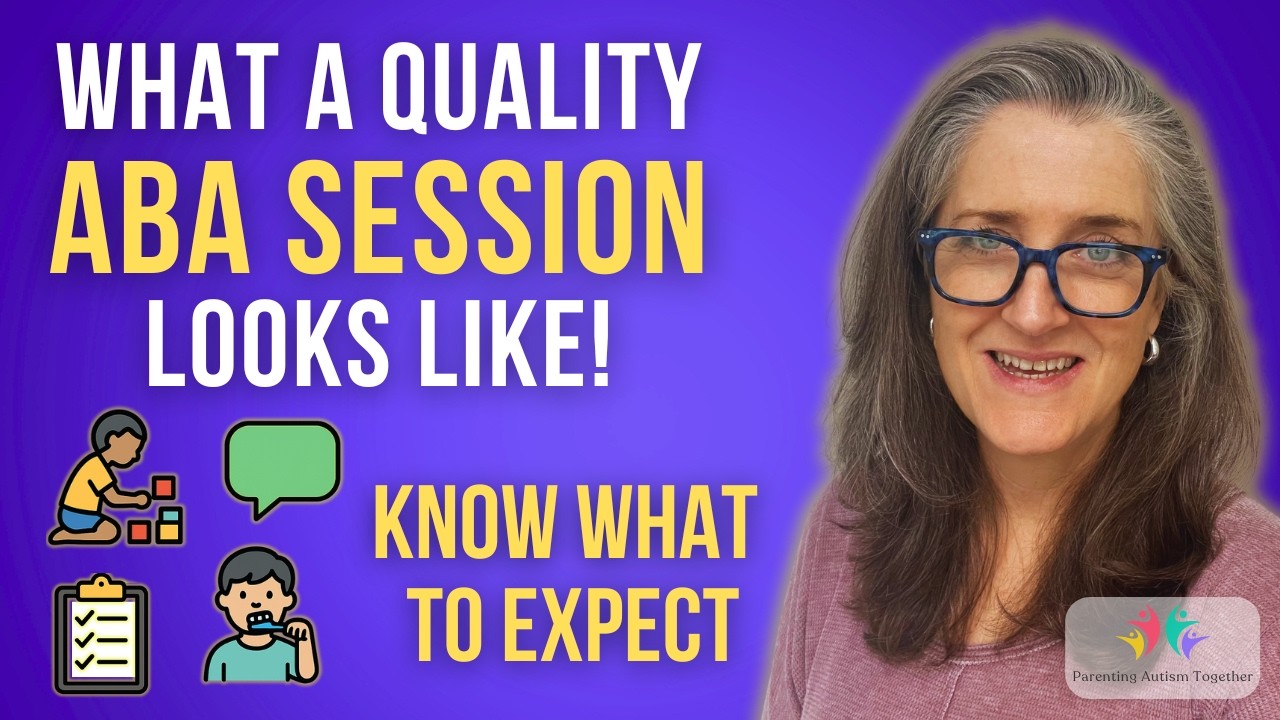
Your involvement is also the single biggest predictor of how well skills carry over from a session into real life. A strategy that only works when the technician is in the room has not really been learned yet.
How to Tell If It Is Working
Progress in ABA is rarely dramatic before-and-after. More often, it looks like a string of small, concrete changes: a child asking for something instead of melting down, tolerating a haircut for the first time, playing alongside a sibling, or sleeping through the night.
Because sessions are tracked with data, you should never have to rely on a vague sense of whether things are improving. You can ask to see the goals, the baseline, and the trend. A trustworthy team will welcome that question and will be just as honest when something is not working and needs to change. We put together a full guide on the signs that ABA therapy is working to help you read progress with confidence rather than guesswork.
If weeks go by with no movement and no adjustment from the team, that is a flag worth raising. Good programs adapt.
Getting Started: What to Expect
The path usually follows a recognizable shape. It begins with an evaluation or diagnosis, moves into an assessment by a BCBA, and from there into an individualized plan with specific, agreed-upon goals. Once therapy begins, the team gathers data, reviews progress with you regularly, and adjusts as your child develops.
Insurance and Medicaid commonly cover ABA services when a child has a qualifying diagnosis, though the specifics depend on your plan. A good provider will help you understand your coverage rather than leaving you to navigate it alone.
The most important thing in the early days is to ask questions. You are allowed to interview a provider, to ask how they handle a child’s distress, to ask what their approach to autistic identity is, and to expect clear answers.
Conclusion
ABA therapy, done well, is a flexible, individualized, evidence-informed way to help an autistic child build the skills that matter to them and to your family. It is not about changing who your child is. It is about communication, independence, safety, and connection, supported by a qualified team and measured with real data. Across this guide, we covered what ABA is, how its core principles work, who it tends to help, the range of services available from in-home to early intervention to parent training, how hours are decided, the central role parents play, and how to recognize genuine progress. If you take one thing away, let it be this: you are the expert on your child, and the right provider treats you that way.
Get Started With Admire ABA
If you are ready to talk through your child’s needs, we are here to help. Admire ABA proudly supports families across Maryland, including the Baltimore area, Wheaton in Montgomery County, and Bowie in Prince George’s County, with in-home, early intervention, weekend, and daycare-based ABA services, parent training, and diagnostic support.
Contact us today to schedule a consultation. Reach out through our website’s contact form, give our team a call at 443-448-8699, or send us an email at [email protected], and we will walk you through your options, your coverage, and the next steps.
Frequently Asked Questions
What is ABA therapy, and how does it work?
ABA, or Applied Behavior Analysis, is a therapy based on the science of learning. A Board Certified Behavior Analyst assesses a child, then uses individualized goals and positive reinforcement to build skills like communication, daily living, and social connection while honoring the child’s needs and dignity.
At what age can a child start ABA therapy?
Children can begin as early as toddlerhood. The American Academy of Pediatrics recommends autism screening at 18 and 24 months, and many children start early intervention before age five, when learning is especially responsive. There is also no upper age limit, and older children and teens can benefit too.
How many hours of ABA therapy a week does a child need?
It depends on the child. A BCBA’s assessment determines whether focused support of a few hours a week or more comprehensive programming fits best, and that number is reviewed as the child grows. The right amount supports progress while leaving room for rest and play.
SOURCES:
- https://behavioral-innovations.com/blog/the-role-of-parents-in-aba-therapy/
- https://www.bhcoe.org/2021/07/the-role-of-caregiver-involvement-in-aba-therapy/
- https://www.journalser.com/jser/article/download/57/29/555
- https://pmc.ncbi.nlm.nih.gov/articles/PMC6269398/
- https://www.sciencedirect.com/science/article/abs/pii/S1077722911000745