
Introduction
Every child has something to say. When a child is minimally verbal or nonspeaking, the challenge is not a lack of thoughts, ideas, or feelings. There is a gap between what they understand and what they can express through spoken words. Closing that gap is one of the most meaningful things a family can do, and it usually starts with the right communication tools.
If you have searched for AAC for nonverbal autistic children, you are already on the right track. Augmentative and alternative communication, or AAC, gives a child a reliable way to communicate when speech alone is not enough. In this guide, we walk through what AAC actually is, the main types of tools available, the research that should ease your worries about speech, and practical steps for getting started.
What “Minimally Verbal” Really Means
You will see several terms used to describe children who do not rely on spoken language: nonverbal, nonspeaking, and minimally verbal. We prefer minimally verbal and nonspeaking, because they describe how a child communicates without making assumptions about intelligence or potential. A child who does not speak is not a child who has nothing to say.
This is where one of the most important ideas in communication support comes in: presuming competence. We always start from the assumption that a child understands more than they can currently express, and we build supports around that belief. In our sessions, we frequently see children who were described as having limited communication light up the moment they are handed a tool that finally lets their ideas land. The words were there all along. They just needed a different path out.
Autism is a difference in how a person communicates and processes the world, not a deficit to be erased. The goal of AAC is never to make a child “more typical.” It is to give them autonomy, reduce the frustration that often fuels challenging behavior, and let them participate fully in their own life.
What Is AAC?
AAC stands for augmentative and alternative communication. It is an umbrella term for any method of communicating that supplements or replaces spoken language. According to the American Speech-Language-Hearing Association (ASHA), AAC includes everything from gestures and facial expressions to picture symbols and sophisticated electronic devices.
The two broad categories are simple to understand:
Unaided AAC uses only the body. This includes gestures, body language, facial expressions, and formal sign systems. Nothing external is required.
Aided AAC uses tools outside the body. This ranges from low-tech options like picture cards and communication boards to high-tech speech-generating devices and tablet apps.
A common myth is that a child must “graduate” from low-tech to high-tech tools or master certain skills before AAC is appropriate. ASHA is clear that there are no prerequisites for AAC. A child does not need to prove readiness, hit a cognitive milestone, or reach a certain age before being given a way to communicate. Communication is a basic human right, and the tools should arrive as early as possible.
The Main Types of AAC Tools
There is no single best system. The right fit depends on the child’s motor skills, visual processing, preferences, and the environments they spend time in. Most children end up using a combination. Here are the tools families encounter most often.
Sign and Gestures
Manual signs and natural gestures are unaided, always available, and require no equipment that can break or run out of battery. For some children, especially those who learn well through movement, signs can be an intuitive starting point. The limitation is that signs only work when the listener also understands them, which can narrow a child’s communication partners outside the home.
Picture-Based Systems (PECS)
The Picture Exchange Communication System (PECS) teaches a child to hand a picture symbol to another person in exchange for what they want. It is structured, evidence-based, and built around a powerful early lesson: communication produces a result. A child quickly learns that handing over a picture of a cookie gets them a cookie, and that cause-and-effect understanding becomes the foundation for richer language later.
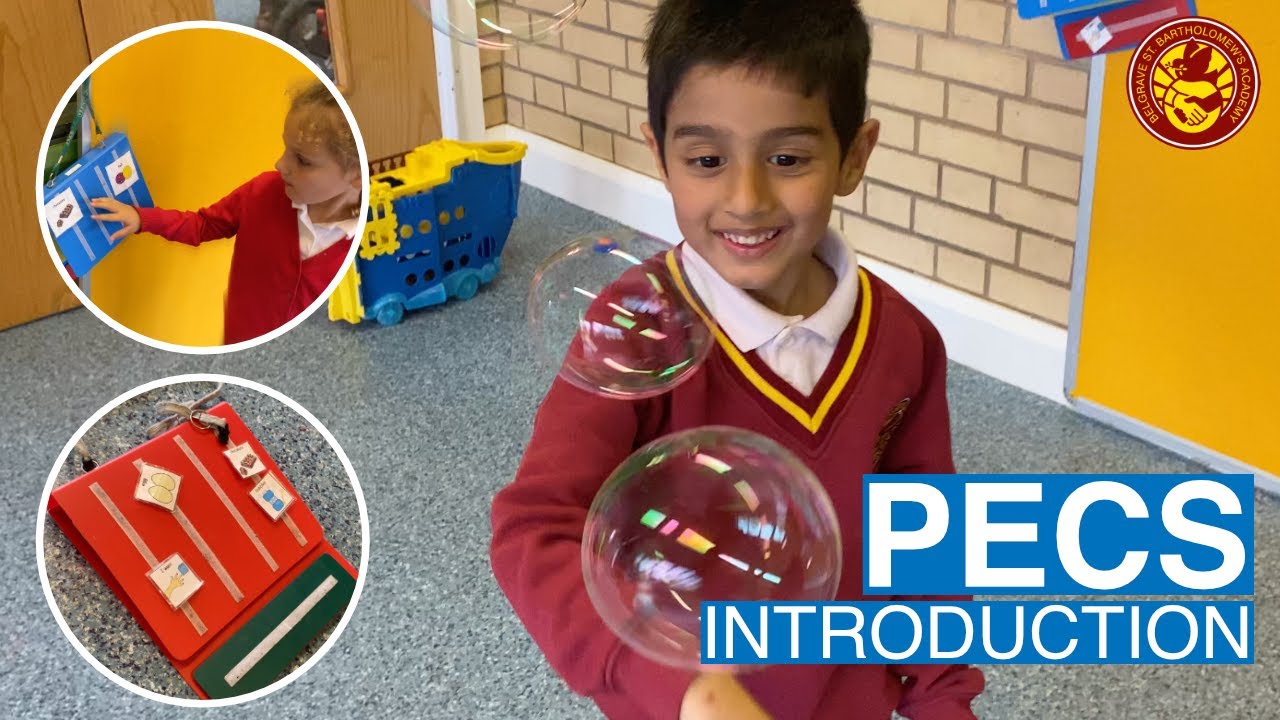
PECS is taught in phases, beginning with single-picture exchanges and progressing toward building short sentences and commenting on the world. Many families like that it is low-cost, portable, and easy to start at home.
Speech-Generating Devices and AAC Apps
High-tech AAC includes dedicated speech-generating devices and apps that run on a tablet. When the child selects a symbol or word, the device speaks it aloud in a clear voice. This gives the child a voice that any listener can understand, whether that is a grandparent, a classmate, or a cashier.
Modern AAC apps offer large, customizable vocabularies and can grow with the child from single words to full sentences. The trade-offs are cost, the need for setup and programming, and the reality that a device can be misplaced or run out of charge. For many minimally verbal children, though, the independence a speech-generating device provides is well worth the investment.
Will AAC Stop My Child From Talking? The Research Says No
This is the single biggest worry we hear from parents, and it is completely understandable. The fear is that giving a child a device or picture system will make them “lazy” and remove any reason to speak.
The research points firmly in the opposite direction. Decades of studies, summarized by ASHA, show that AAC does not hinder speech development. In fact, the evidence suggests that for many children, AAC use is associated with gains in natural speech. This makes sense when you think about it: AAC reduces the pressure and frustration around communication, models language visually, and reinforces the connection between symbols, words, and meaning. Rather than replacing speech, it often builds the very foundation that speech grows from.
The American Academy of Pediatrics (AAP) similarly supports early, robust communication intervention for autistic children and recognizes AAC as a valuable part of that support. Withholding AAC in the hope that a child will “just start talking” can cost years of communication access, and there is no evidence that waiting helps.
So the honest answer is this: AAC will not take your child’s voice away. It is far more likely to help them find it.
Getting Started: A Practical Roadmap
Knowing AAC matters is one thing. Knowing where to begin is another. Here is the path we typically recommend to families.
Start with an evaluation by a speech-language pathologist (SLP) who has AAC experience. The SLP assesses how your child currently communicates, their motor and visual abilities, and which tools might fit best. This is also where insurance funding for a device often begins, since many speech-generating devices are covered with proper documentation.
From there, the goal is consistency. A communication tool only works if it travels with the child everywhere and if the adults around them model its use. We coach families to “say it and show it,” meaning you speak the word while also pressing the button or pointing to the symbol. Children learn AAC the same way they learn spoken language: by seeing it used naturally, over and over, by the people they love.
It also helps to connect AAC support to your child’s broader developmental plan. The earlier a child gains a reliable way to communicate, the better, which is why we so often tie AAC into early intervention for autism. For families whose child has a co-occurring language disorder associated with autism, AAC becomes even more essential, since it provides a stable communication channel that does not depend on spoken language alone.
How ABA Therapy Supports AAC Use
AAC and ABA therapy work powerfully together. A device or picture system gives a child the tool, while skilled therapy teaches them how and when to use it across real-life situations.
In our sessions, we embed AAC into everything: requesting a snack, choosing an activity, asking for a break, protesting, and commenting. We use the child’s own motivation as the engine, so communication is always tied to something they actually want or care about. We also focus heavily on generalization, making sure a skill learned at the table shows up at the playground, in the kitchen, and in the classroom.
Because so much of a child’s communication happens at home, parent training is a core part of the work. We have seen again and again that progress accelerates when caregivers feel confident modeling AAC themselves, rather than leaving it to therapy hours alone. When the whole family speaks the child’s language, the child has far more reason to use it.
Conclusion
Supporting a minimally verbal child starts with a simple belief: your child has plenty to say, and it is our job to find the path that lets them say it. AAC, whether it is sign, a picture exchange system like PECS, or a speech-generating device, offers that path. The research is reassuring on the question parents worry about most, since AAC supports rather than suppresses speech, and the tools work best when they are introduced early, used consistently, and modeled by the people around the child.
There is no single right answer, only the right fit for your child, guided by a knowledgeable SLP and reinforced through therapy and everyday family life. Communication is a right, not a reward, and the sooner a child has a reliable way to express themselves, the sooner the frustration fades, and the connection grows.
Get Started With Admire ABA
If your child is minimally verbal or nonspeaking, you do not have to figure this out alone. At Admire ABA, our team helps families across Maryland, including the Baltimore, Gaithersburg in Montgomery County, and Ellicott City in Howard County areas, build communication-focused plans that combine AAC with individualized ABA therapy and hands-on parent training.
Contact us today to schedule a consultation and take the first step toward giving your child a voice.
Frequently Asked Questions
Does AAC stop or delay a child from learning to talk?
No. Research summarized by ASHA shows that AAC does not hinder speech development, and for many children, AAC use is linked to gains in natural speech. AAC reduces communication frustration and reinforces the connection between symbols, words, and meaning, which can support spoken language rather than replace it.
At what age can a child start using AAC?
There is no minimum age and no prerequisites for AAC. A child does not need to master certain skills first. Communication tools can and should be introduced as early as possible, often during the toddler years, so a child has a reliable way to express themselves from the start.
What is the difference between PECS and a speech-generating device?
PECS is a low-tech, picture-based system where a child hands over a symbol to communicate, while a speech-generating device is a high-tech tool that speaks words aloud when the child selects them. PECS is portable and inexpensive and teaches early cause-and-effect communication, while a device offers a larger vocabulary and a voice any listener can understand. Many children use both, and an SLP can help determine the best fit.
SOURCES:
- https://www.asha.org/njc/aac/?srsltid=AfmBOorNJ9IWEMD2M1pOZ-mm0_fQ1ERmWz9fm3OPmuukmgyjNs21whny
- https://www.fluentaac.com/post/types-of-aac
- https://www.rcslt.org/speech-and-language-therapy/clinical-information/augmentative-and-alternative-communication/
- https://www.sciencedirect.com/topics/medicine-and-dentistry/aided-communication
- https://pubmed.ncbi.nlm.nih.gov/21866714/