Introduction
If you’ve noticed your toddler isn’t pointing, isn’t making eye contact, or doesn’t respond when you call their name, you’re probably wondering what to do next. The good news is that research consistently shows the earlier a child with autism receives evidence-based support, the better their long-term outcomes. Applied Behavior Analysis (ABA) therapy starting before age three takes advantage of a critical window of brain development, a period when language, social connection, and self-regulation skills are forming most rapidly.
But early ABA looks nothing like the structured table-time many parents picture. For a two-year-old, therapy happens through play, songs, snack time, and bath routines. This guide walks parents through what ABA actually looks like for under-3s, the developmental milestones worth watching, and how early intervention differs from the ABA programs offered to older children.
Why Early Intervention Matters Most Before Age 3
The first three years of life are when the brain forms more neural connections than at any other point in development. For a child showing early signs of autism, this period is the highest-leverage window to build foundational skills, joint attention, imitation, communication, and emotional regulation, before gaps widen.
Long-term studies have shown that toddlers who begin ABA therapy before age three often need fewer therapy hours later in childhood, transition more smoothly into preschool, and develop stronger language outcomes than peers who start at age five or six. That doesn’t mean later-starting ABA isn’t valuable. It absolutely is, but starting early changes the trajectory of skill development.
In Maryland, families have access to early intervention services through the Maryland Infants and Toddlers Program (MITP), and private ABA providers can often coordinate alongside these state services to give children comprehensive support during this critical window.
What ABA Therapy Actually Looks Like for Toddlers Under 3
A common misconception is that ABA means a child sitting at a table doing flashcards. For toddlers, almost nothing could be further from the truth. Early ABA is play-based, naturalistic, and woven into the moments a toddler is already curious and engaged.
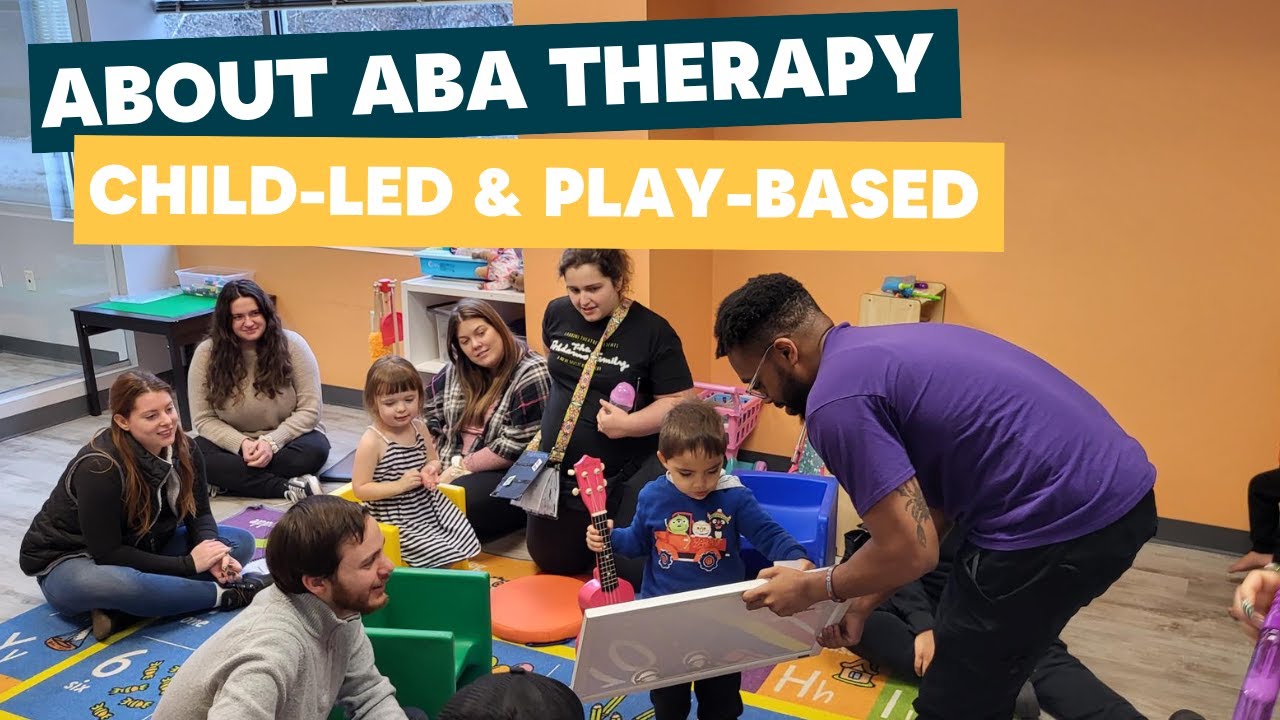
A typical session for a two-year-old often includes:
Floor-based play with toys the child already loves. The therapist follows the child’s lead. If they reach for a bubble wand, the therapist uses that interest to teach requesting (“more”), turn-taking, eye contact, and shared enjoyment.
Embedded learning in daily routines. Snack time becomes an opportunity to practice making choices, using picture cards, or saying single words. Bath time becomes a chance to build receptive language (“wash your tummy”) and label body parts.
Short, frequent learning opportunities. Instead of long structured drills, toddlers experience dozens of brief teaching moments per hour, each lasting seconds rather than minutes.
Heavy use of reinforcement. Toddlers learn best when learning feels rewarding. Therapists pair new skills with immediate, meaningful reinforcement, a tickle, a favorite song, or a chase game, so the child wants to repeat the behavior.
Parent participation. Unlike school-age ABA, early intervention sessions almost always include the parent or caregiver. Children under three spend the vast majority of their waking hours with family, so coaching parents on how to use ABA strategies during diaper changes, bedtime, and trips to the grocery store multiplies the impact of every therapy hour.
In our sessions with toddler clients, we’ve consistently seen that the children who progress fastest are often the ones whose parents feel confident running short “mini-sessions” themselves throughout the day, five minutes of pairing pointing with naming during a walk, three minutes of imitation games during dinner cleanup. That’s not extra work; it’s reshaping the moments that already exist.
Developmental Milestones to Watch For in the First Three Years
Most parents don’t need a checklist to feel that something is off. They sense it. But knowing the specific milestones can help you decide whether to request an evaluation. Below are the early markers that pediatricians and developmental specialists watch closely.
- By 9 months, most babies turn toward sounds, babble back and forth, and use facial expressions to communicate.
- By 12 months, most toddlers respond to their name, wave bye-bye, point to objects of interest, and use simple gestures.
- By 18 months, most children say several single words, point to share interests (not just to request), engage in pretend play with toys, and look where you point.
- By 24 months, most toddlers use two-word phrases, follow simple instructions, imitate actions and words, and show interest in other children.
- By 36 months, most three-year-olds carry on short conversations, play pretend with others, follow two-step directions, and use a wide vocabulary.
Common early signs that warrant a closer look include limited or no response to name by 12 months, lack of pointing or showing by 16 months, no two-word phrases by 24 months, loss of previously acquired words or social skills at any age, intense interest in lining up or spinning objects, strong distress at sound, texture, or routine changes, and limited eye contact or shared smiling.
A child showing one or two of these signs doesn’t necessarily have autism, but it is a reason to request a developmental screening. Waiting often costs more than acting early.
How Early ABA Differs from School-Age ABA
Parents who research ABA often come across descriptions of older-child programs and worry that those approaches won’t suit their toddler. They’re right to wonder. Early ABA differs meaningfully from school-age ABA in five key ways.
Setting. Toddlers learn at home, at daycare, or in the spaces they already know. Older children may attend center-based ABA or receive support in school settings. For under-3s, in-home therapy and daycare-based ABA are usually the most effective because young children generalize skills poorly across unfamiliar environments
Goals. Early ABA focuses on foundational skills, joint attention, requesting, imitation, play, parent-child connection, and tolerating routines. School-age ABA shifts toward academic readiness, peer interaction, self-management, and complex communication.
Structure. Sessions for toddlers are short bursts of play-based teaching, often two to three hours at a time, with frequent breaks. Older children can sustain longer, more structured sessions and may benefit from formats that mirror classroom expectations.
Parent involvement. Parent training is the centerpiece of early ABA. For school-age children, parents are still involved, but the therapist works more independently with the child, often coordinating with teachers and other professionals.
Pace of progress. Toddlers often acquire skills quickly because the brain is so plastic at that age. Skills like requesting, imitating, and pointing can emerge within weeks of focused intervention. Older children typically progress steadily but at a slower pace, especially when working on complex social or academic skills.
Where Early ABA Happens: Settings That Work for Under-3s
For toddlers, where therapy happens matters as much as what happens. Three settings tend to work best:
In-home ABA. Most under-3s benefit from receiving therapy in the environment where they already feel safe. Skills practiced at home generalize quickly because the toys, people, and routines are real. Therapists work in the kitchen during meal prep, in the bedroom during diaper changes, and on the living room floor during play.
Daycare-based ABA. For working families, daycare-based ABA brings the therapist into the child’s existing schedule. This setting has the added benefit of building peer skills, sharing, parallel play, and turn-taking in a real social environment with same-age children.
Parent-led practice between sessions. No therapist can be present for the 100+ waking hours a week your child spends learning. The parents we work with who see the strongest progress are the ones who use short, embedded teaching moments throughout their day. That’s exactly what structured parent training programs are designed to build.
A Look at One Family’s Early Intervention Journey
One family we work with in Severn started ABA shortly after their son’s second birthday. He had fewer than five spoken words, didn’t respond to his name, and would melt down when his routine changed even slightly. His parents had been told by well-meaning relatives to “wait and see.”
We began with three short in-home sessions per week, focused on three goals: building requests through favorite snacks and toys, increasing joint attention during play, and helping him tolerate small transitions. His mother sat in on every session and practiced the strategies during bath time and meals.
Within four months, he had over thirty spoken words, was pointing to share interests, and could move from playtime to the car with one verbal warning instead of a meltdown. By his third birthday, he transitioned into a preschool program with continued support, and his early intervention services shifted to lower-intensity coaching.
This trajectory isn’t guaranteed for every child. Progress depends on many factors, but it illustrates how much can change when therapy starts during the toddler years.
When to Seek an Evaluation
If your child is under three and showing several of the early signs listed above, the next step is a developmental evaluation. You don’t need a referral to request one. You can contact your pediatrician, the Maryland Infants and Toddlers Program, or a private diagnostic provider directly.
A formal autism diagnosis is not required to begin some forms of early intervention, but it is generally required for insurance to cover ABA therapy. Diagnostic services for toddlers typically include a developmental history interview, structured observation, and standardized assessments like the ADOS-2.
The most common regret we hear from parents of older children is that they waited. The most common reflection from parents who acted early is that they wished they’d trusted their instincts even sooner.
Conclusion
ABA therapy for toddlers under three looks nothing like the structured drills people imagine when they hear the term. It happens on living room floors, at daycare snack tables, during bath time, and bedtime stories. It centers play, it relies on parents as active partners, and it focuses on the foundational social, communication, and regulation skills that everything else builds on.
The developmental window before age three is unmatched. If you’ve noticed your toddler isn’t hitting milestones, your instincts are worth acting on. Early evaluation costs you nothing, and waiting often costs more than parents expect. The combination of play-based therapy, parent training, and consistent practice in familiar environments has changed the trajectory for countless families across Maryland.
Get Started With Early ABA for Your Toddler
Admire ABA provides early intervention ABA therapy for toddlers and young children across Maryland, including families in Severn, Anne Arundel County, and Howard County. Whether you’re looking for in-home support, daycare-based therapy, parent training, or guidance on diagnostic services, our team can help you understand your options and start building a program that fits your child’s specific needs.
Contact us today to learn more about our early intervention services or schedule a consultation. The earlier you start the conversation, the more options you have.
Frequently Asked Questions
At what age can my child start ABA therapy?
Children can begin ABA therapy as young as 18 months old, and some early intervention programs work with toddlers showing developmental concerns even earlier. The American Academy of Pediatrics recommends autism screening at 18 and 24 months, and ABA can begin before a formal diagnosis in many cases. The earlier therapy starts, the more it takes advantage of the brain’s peak developmental window in the first three years.
How many hours of ABA therapy does a toddler need?
The right number of hours depends on your child’s individual goals, developmental level, and family schedule. Toddlers under three typically receive between 10 and 25 hours per week of focused early intervention ABA, often split across short, play-based sessions. Some children benefit from more intensive programming, while others thrive with fewer hours paired with strong parent training. A qualified BCBA will recommend an hour count after a comprehensive assessment.
Does insurance cover ABA therapy for toddlers in Maryland?
Yes, Maryland law requires most private insurance plans and Medicaid to cover ABA therapy for children with an autism diagnosis. Coverage typically includes diagnostic services, assessments, direct therapy hours, and parent training. The exact requirements vary by plan, so it’s worth confirming details with both your insurance provider and your ABA provider before beginning services. Many families also qualify for additional support through Maryland’s Infants and Toddlers Program.
SOURCES:
- https://marylandpublicschools.org/programs/pages/special-education/mitp/index.aspx
- https://mditp.org/
- https://health.maryland.gov/qahealth/community-health/Pages/Infants-and-Toddlers-Program.aspx
- https://pathfindersforautism.org/articles/newly-diagnosed/infants-toddlers-getting-help-for-a-child-birth-to-age-3/
- https://www.mdaap.org/pdf/Physicians%20Guide%20to%20ITP.pdf