Introduction
The week before your child’s first in-home ABA session can feel like the week before bringing a newborn home. You know something important is about to start, you want to do it right, and you’re not entirely sure what “right” looks like. The good news: preparing your home for ABA therapy isn’t about creating a clinical environment. It’s about creating a space where your child can learn, your therapist can work, and your family’s daily life can keep moving.
This guide walks you through everything practical, the physical setup, the distraction audit, sibling preparation, and what actually happens on day one. Every section ends with a checklist you can save and work through at your own pace.
Why Home Preparation Matters More Than Parents Expect
In our sessions across Maryland, we’ve noticed a clear pattern: families who spend even an hour preparing their space before the first visit see smoother sessions in the first two weeks. Kids settle into the routine faster. Therapists can focus on the child instead of constantly adjusting the environment. And parents feel less like they’re being observed and more like they’re part of a team.
Home preparation isn’t about perfection. It’s about removing friction so that the actual work, teaching skills, building connections, and reducing challenging behaviors can happen.
Setting Up the Therapy Space
Your child doesn’t need a dedicated therapy room. Most Maryland families we work with don’t have a spare room sitting empty, and that’s completely fine. What matters is choosing a consistent area and making it functional.
Choosing the right location. Look for a space with enough room for your child and the therapist to sit comfortably, ideally with a small table and two chairs, or floor space for play-based work with younger children. The space should be near a bathroom and reasonably close to a sink for snacks and handwashing. Avoid spaces that double as high-traffic zones, the kitchen during dinner prep, or a living room where older siblings game after school, which will create constant interruptions.
Lighting and temperature. Natural light is ideal, but a well-lit room with soft overhead lighting works fine. Many children with autism are sensitive to fluorescent buzz or harsh overhead lights, so if your only option has overhead fluorescents, consider a floor lamp instead. Keep the room at a comfortable, stable temperature. Children who run hot or cold will struggle to focus.
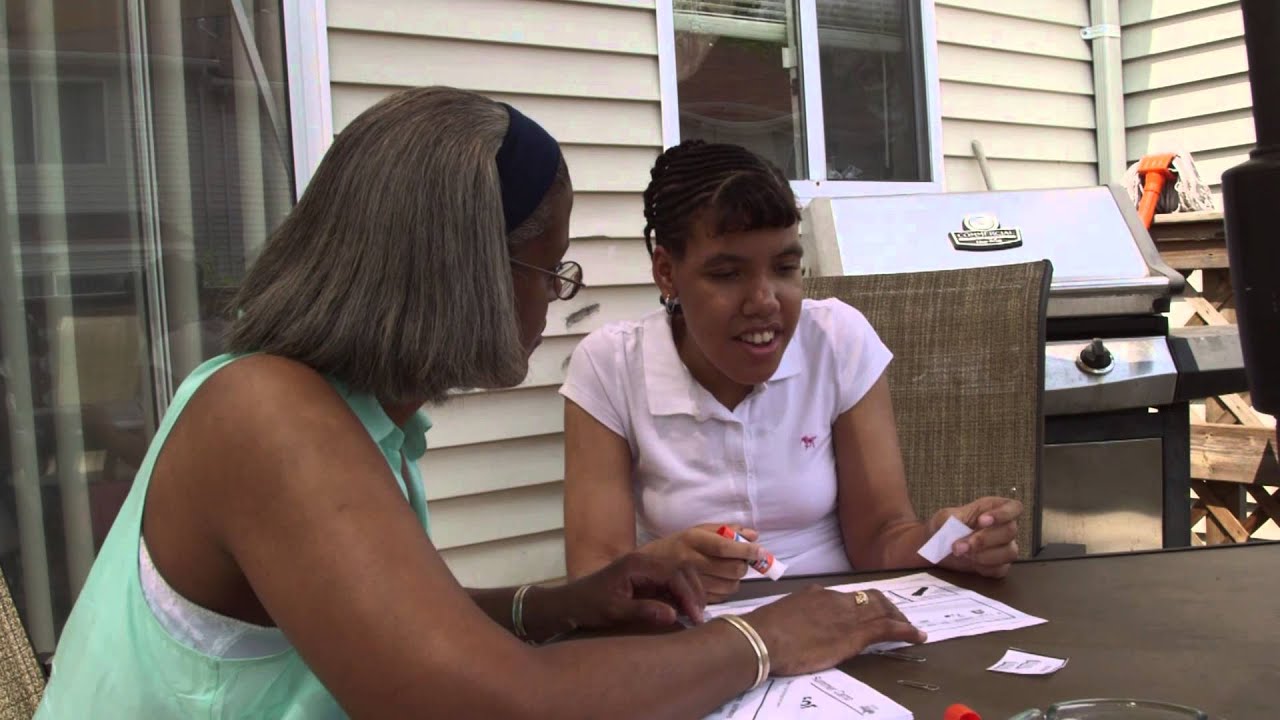
Storage for materials. Your therapist will bring some materials, but you’ll accumulate visual schedules, token boards, preferred toys used as reinforcers, and data sheets. A small bin, drawer, or shelf dedicated to therapy items keeps things organized and signals to your child that this space has a purpose.
Setup Checklist:
- Consistent space identified (doesn’t need to be a dedicated room)
- Small table and two chairs, or clear floor space
- Comfortable, stable lighting (no harsh fluorescents if possible)
- Near a bathroom and accessible to water/snacks
- Storage bin or shelf for therapy materials
- Phone charger nearby (therapists often take data on tablets)
Removing Distractions Without Sterilizing the Space
This is where parents tend to overcorrect. You don’t need to strip the walls bare or hide every toy. You do need to think about what will pull your child’s attention away from learning.
The TV and tablet question. Screens are the single biggest distraction we see. If a TV is visible from the therapy space, turn it off and ideally cover it or close the cabinet during sessions. Tablets and phones should be out of sight unless they’re being used as a therapy tool. This applies to family members, too. A sibling watching YouTube in the next room with the door open will derail focus quickly.
Preferred items become reinforcers. Your therapist will likely ask you to identify your child’s favorite toys, snacks, and activities. These often get pulled out of free access and used as reinforcers during sessions. That doesn’t mean your child loses them forever. It means they become motivating tools. Talk to your therapist before the first session about which items they’d like reserved.
Noise management. Background noise is more disruptive than most people realize. Washing machines, dishwashers, loud HVAC systems, and barking dogs all compete for attention. If you have a dog that barks at the doorbell, plan. Many families put their dog in a back bedroom or crate during sessions for the first few weeks.
Visual clutter. A room with too many toys visible can be overwhelming. Consider rotating toys in and out, keeping only a few accessible at a time. This isn’t a permanent change. It’s a session-time adjustment.
Distraction Audit Checklist:
- TV off and out of view during sessions
- Tablets and phones are stored away unless used therapeutically
- Preferred reinforcer items identified and reserved
- Dogs and pets are managed (in a separate room, crate, or outside)
- Loud appliances are scheduled around session times
- Toys are minimized in the immediate therapy space
Preparing Siblings for the New Routine
Siblings are often the overlooked part of the preparation conversation, but they shape the home environment more than any other factor. A confused older sister or a jealous younger brother can unintentionally undo a productive session in the five minutes after the therapist leaves.
Age-appropriate explanations. For younger siblings (ages 3 to 7), keep it simple: “Sarah is going to work with a special teacher named Ms. Jen, who helps her learn how to do things that are hard for her. While Ms. Jen is here, we’re going to do quiet things together.” For older siblings (8 and up), you can be more direct about what ABA is and why it helps. Honesty prevents resentment.
The fairness question. Older siblings often notice that their brother or sister is getting extra attention, special toys, or treats during sessions. This is real, and pretending otherwise breeds resentment. Acknowledge it openly: “I know it might feel unfair that David gets to play with the bubbles only during therapy. Those are his special learning tools. Let’s figure out something that’s just for you, too.” Many parents we work with set up a “sibling activity box”, a special bin of activities (Legos, art supplies, a tablet with downloaded shows) that only comes out during session times.
Boundaries during sessions. Siblings shouldn’t be in the therapy space unless they’re invited as part of a structured peer-play goal. Set this expectation before day one, not during. Have a plan for where siblings will be and what they’ll be doing for each session block.
Including siblings strategically. Once therapy is established, your BCBA may suggest structured sibling involvement, practicing turn-taking, modeling appropriate play, or running a simple reinforcement program. This is powerful when done with guidance, but it shouldn’t happen on day one.
Sibling Prep Checklist:
- Age-appropriate conversation completed before day one
- Sibling activity box or special quiet-time plan ready
- Clear expectations about staying out of the therapy space
- Acknowledgment of the fairness issue, not avoidance
- Plan for sibling supervision during sessions
What to Expect on Day One
The first session rarely looks like a “real” therapy session, and that’s intentional. Your therapist is there to build rapport, observe your child in their natural environment, and start the process of pairing, becoming associated with good things, so your child looks forward to future visits.
The first 30 minutes. Expect introductions, some paperwork review, and a tour of the space. Your therapist will likely sit on the floor and follow your child’s lead, playing with whatever your child gravitates toward. There will be no demands, no flashcards, no compliance work. This is a pairing, and it’s the foundation of everything that comes after.
Your role on day one. Stay nearby but not hovering. Your therapist may ask questions about routines, preferences, triggers, and goals. Be honest, even about the hard parts, the meltdowns at bath time, the food aversions, the bedtime struggles. The more your therapist knows, the better the treatment plan.
What your child might do. Some children warm up immediately. Others hide, cry, or ignore the therapist entirely. All of these are normal. We had a family in our in-home ABA therapy program whose four-year-old spent the entire first session in his bedroom with the door closed. By week three, he was meeting his therapist at the door with a toy in his hand. Rapport takes time, and pushing it backfires.
Documentation and consent. You’ll review and sign treatment consent forms, HIPAA documents, and likely an intake questionnaire if you haven’t already. Have your insurance card, your child’s diagnostic report, and any relevant evaluations (school IEPs, OT or speech reports) ready.
Day-One Checklist:
- Insurance card and diagnostic documentation accessible
- IEP, speech, or OT reports gathered if available
- A list of your child’s preferred items and activities
- A list of known triggers and challenging behaviors
- Realistic expectations: pairing, not performance
- You: rested, patient, and ready to share honestly
After Day One: Building the Routine
Consistency matters more than intensity. A predictable schedule helps your child anticipate sessions and reduces anxiety. Try to keep session times stable from week to week, especially in the first month. If sessions are scheduled after school, build in 15 to 30 minutes of decompression time before the therapist arrives. Most children can’t transition straight from school demands to therapy demands.
Communicate openly with your BCBA. If something isn’t working, the time of day, the space, or a particular approach, say so. ABA is collaborative, and your input shapes the plan.
Conclusion
Preparing your home for in-home ABA therapy comes down to four things: a consistent space, fewer distractions, prepared siblings, and realistic expectations for day one. None of this requires renovation, expensive equipment, or a perfect home. It requires intention. Families who walk through these checklists before the first session consistently tell us that the first month felt manageable instead of overwhelming, and that their child settled into therapy faster than they expected.
Your home doesn’t need to look like a clinic. It needs to feel like a place where your child can learn safely, where your therapist can work effectively, and where the rest of your family can keep being a family.
Ready to Start In-Home ABA Therapy?
Admire ABA provides in-home ABA therapy, parent training, and early intervention services to families across Maryland, including North Bethesda, Rockville, and Silver Spring. Our team works alongside parents to build practical, sustainable routines that fit real family life, not idealized versions of it. If you’re preparing for your child’s first ABA session, or you’re still exploring whether in-home therapy is the right fit, we’d love to talk.
Contact us today to schedule a consultation, ask questions about insurance and intake, or request a home assessment.
Frequently Asked Questions
How long does the first in-home ABA therapy session usually last?
First sessions typically last between 60 and 90 minutes, though this varies by provider and your child’s tolerance. The initial visit focuses on rapport building and observation rather than structured work, so the time is often shorter and lower-demand than a typical ongoing session, which usually runs 2 to 4 hours.
Do I need a separate room for in-home ABA therapy to work?
No. A dedicated room is helpful but not necessary. Most families use a corner of the living room, a quiet area of a bedroom, or a flexible space like a finished basement. What matters is consistency, low distraction, and enough room for your child and therapist to work comfortably.
Should parents stay in the room during ABA sessions?
It depends on your child’s age, treatment goals, and stage of therapy. Early on, parents often stay nearby to support transitions and observe. As therapy progresses, your BCBA may recommend stepping back to help your child build independence with the therapist, while still scheduling parent training time to learn the techniques being used.
SOURCES:
- https://www.nature.com/articles/s41599-025-05820-w
- https://pmc.ncbi.nlm.nih.gov/articles/PMC9748440/
- https://www.nature.com/articles/s41599-025-05820-w
- https://www.sciencedirect.com/science/article/pii/S0360132324008230
- https://onlinelibrary.wiley.com/doi/10.1155/ina/6946065